


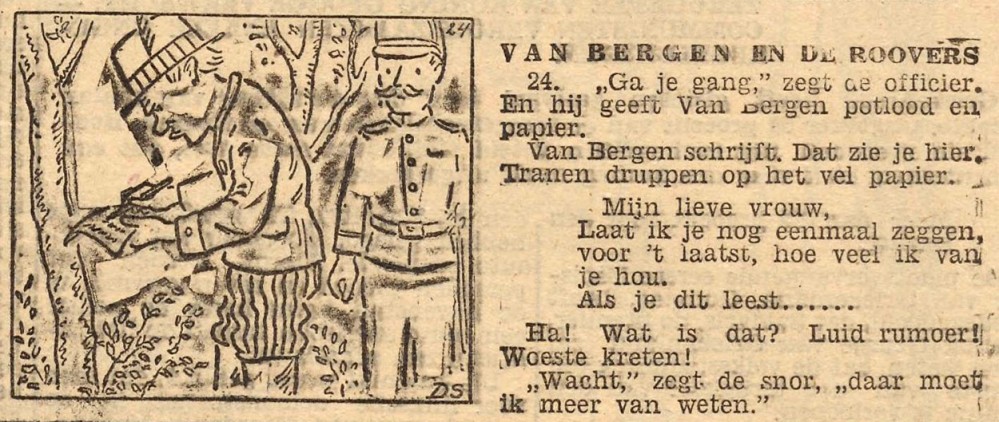
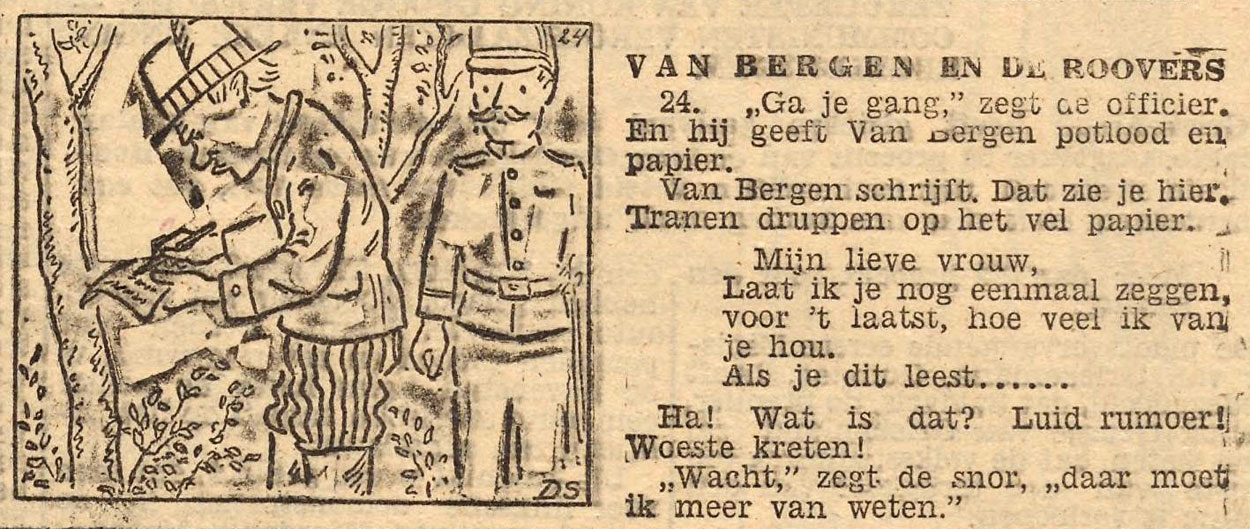
'Van Bergen en de Roovers' (2 September 1946).
Douwe Sikkema was a former school teacher from the Groningen countryside, who during the 1940s and 1950s created several picture stories for the regional newspaper Nieuwe Provinciale Groninger Courant. His best-known creation was 'Van Bergen' (1946-1955), a strange man in a hunter's costume who has all sorts of adventures. In between, he created stories with other characters, such as 'Pieterboer', 'Kobus Klomp', 'Appie en Bertus' and 'Baron 'De Bruin'.
Early life and work
Douwe Sikkema was born in 1899 in Lettelbert, a town in the province of Groningen. His father Kornelis was a wheelwright and cooper. Young Douwe went to school in Enumatil, meaning he had to walk twice a day for 45 minutes on the dike along the Lettelberterdiep. Graduated to work as a teacher in 1918, he worked in this profession for a couple of years, first in Enumatil, then in Nijverdal. However, his poor health forced him to quit.
Returning to his parental home, Sikkema helped with the housekeeping and took care of the chickens, while writing and drawing the occasional story. After his mother died, he bought a nearby farm, where he moved in with his older brother Hendrik. Living a quiet and reclusive life, Sikkema additionally created several picture stories for the Nieuwe Provinciale Groninger Courant, a regional newspaper for a Dutch Reformed demographic.
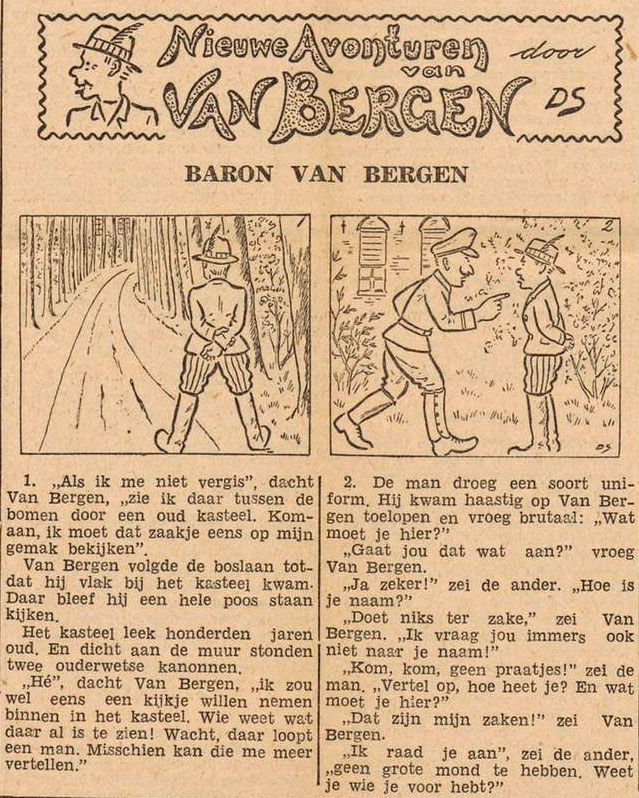
'Van Bergen' (13 November 1948).
Comic strips
Starting on 6 February 1946, the Nieuwe Provinciale Groninger Courant ran several stories with the adventures of mister 'Van Bergen', published with one or two panels a day and with text captions in rhyme. In the debut episode, the title character leaves his wife to go out hunting. It wasn't until 26 February 1947 before he returned home, having experienced all sorts of weird and funny adventures. Some feature everyday situations, like Van Bergen having a toothache, going out fishing and losing his hat. Other stories are more adventurous, when Van Bergen gets in trouble with a group of robbers, or when he tries to build an airplane. Since the narrative appeared in a devout Christian newspaper, the stories were family-friendly, although Sikkema didn't shy away from having his hero almost be hanged by the robbers, who in turn were killed during a shootout. In 1946 and 1947, the newspaper's Groningen publisher Jan Haan released six booklets with Van Bergen's adventures.
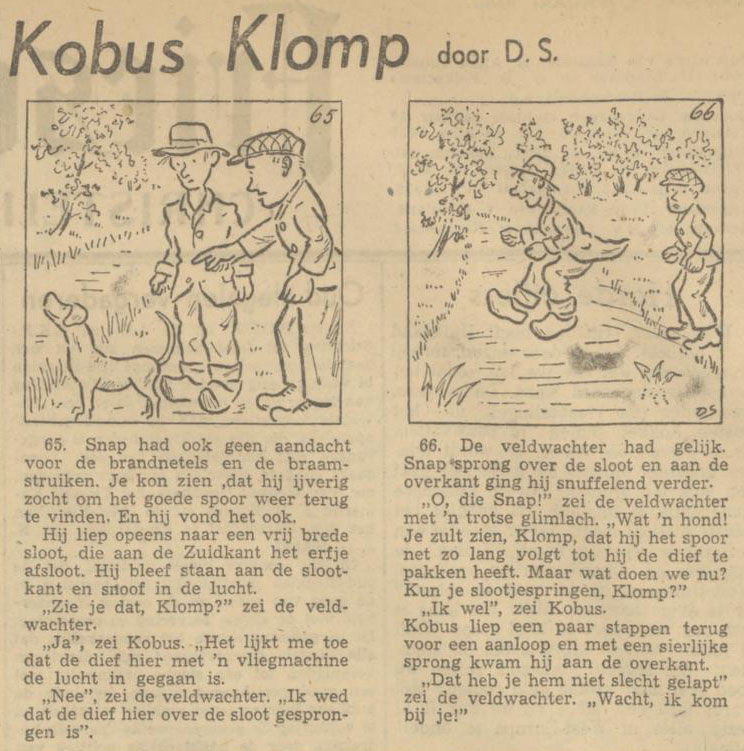
'Kobus Klomp' (1948).
On 4 August 1947, 'Van Bergen' returned to the pages of the Nieuwe Provinciale Groninger Courant with a new series of adventures. Appearing with intervals, these new episodes ran until 25 May 1955. In between, Sikkema created a couple of other comic features, starring clog-wearing countryside characters like 'Pieterboer' (3 July-3 September 1947) and 'Kobus Klomp' (4 November 1947 - 27 January 1948 and 15 October -12 December 1949). Between 23 January 1953 and 5 February 1954, he serialized several stories with the two hunters 'Appie en Bertus' and in the period 1950-1955 many stories with the nobleman 'Baron De Bruin', with the final story concluding on 28 April 1955.
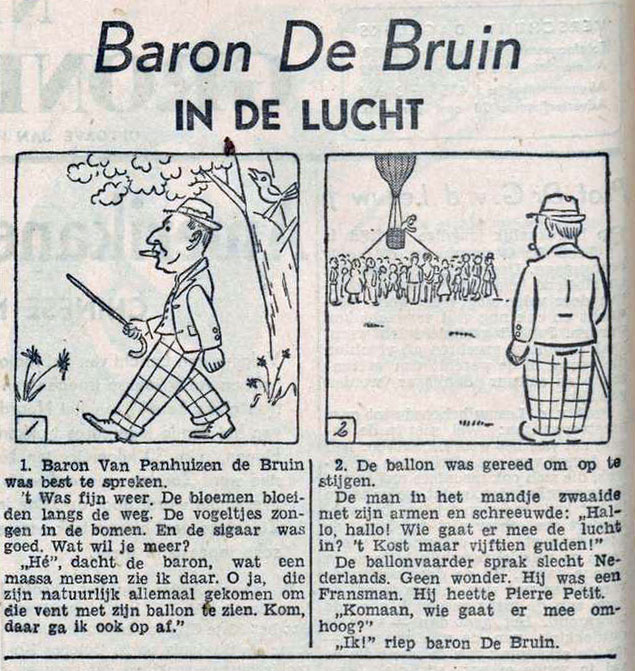
'Baron De Bruin in de Lucht' (21 November 1950).
Later years and legacy
By the mid-1950s, Sikkema's strips disappeared from the newspaper, and the two brothers continued to live their secluded life on their farm. On 6 August 1976, the newspaper Nieuwsblad van het Noorden reported that the two elderly brothers - Hendrik was 87 and Douwe 76 - were robbed in their home by two young men. Threatened with scissors, the brothers had to hand over a wallet with 200 guilders. By the early 1980s, the brothers were living in a retirement home in Leek, where Sikkema died on 19 November 1983 at age 84. His brother Hendrik died a few months later, on 11 February 1984.

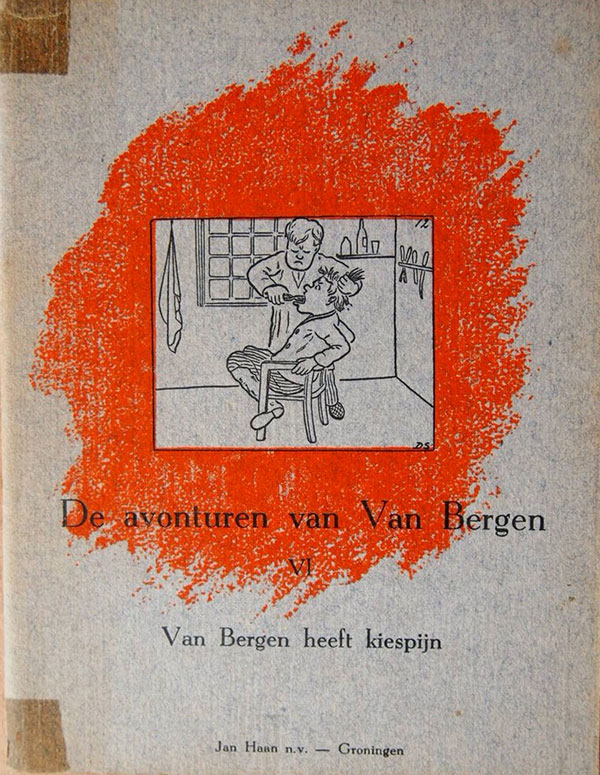
'Van Bergen' booklets.
However, Sikkema's comic characters were far from forgotten in the Groningen region. Especially Van Bergen had left an impression on a generation of post-war children. Starting in 1985 and lasting until the early 1990s, over forty 'Van Bergen' stories were reprinted in Nederlands Dagblad, as were several of his other creations. In the mid-1990s, new book collections were released as well.
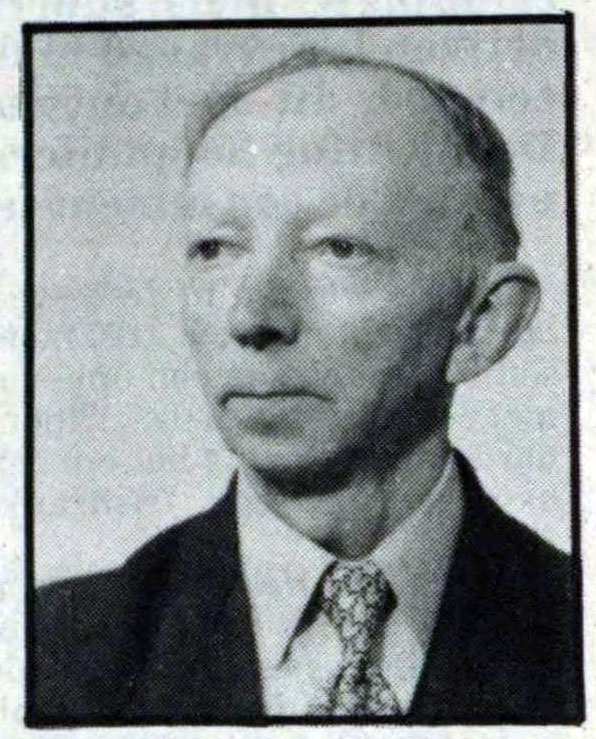
Douwe Sikkema.