


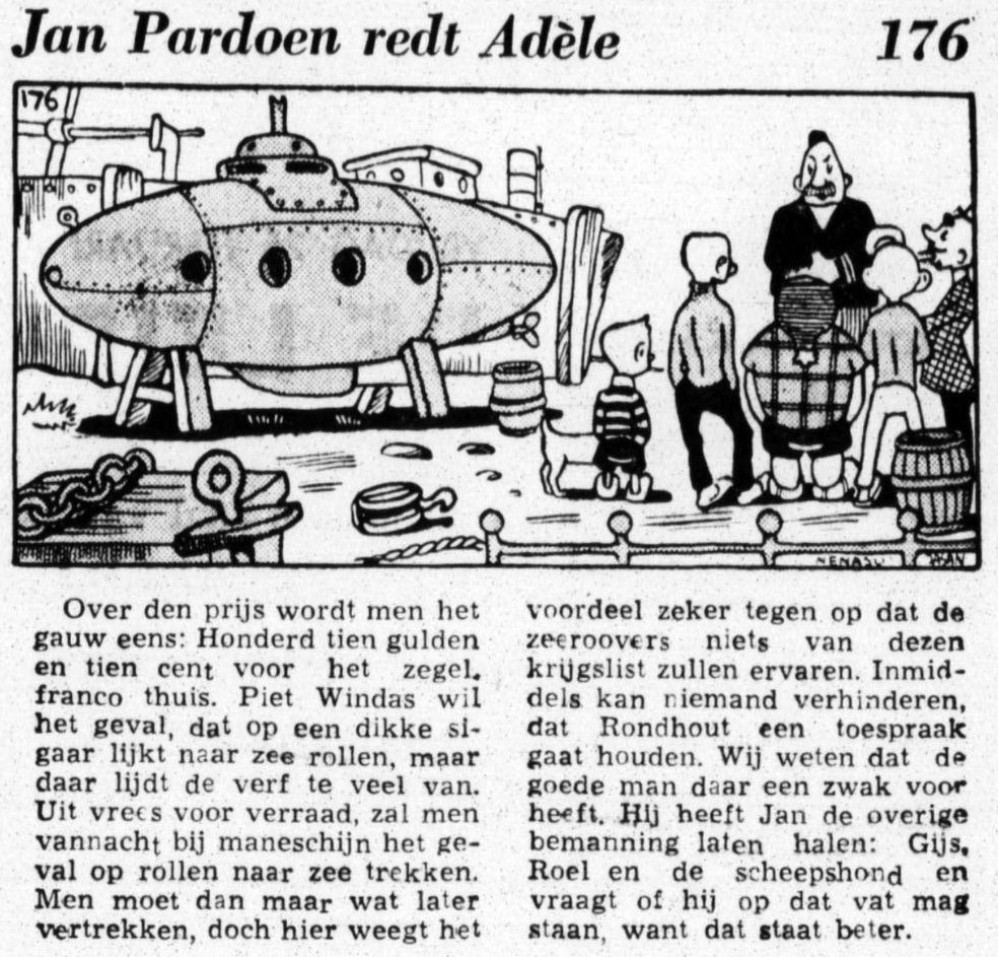
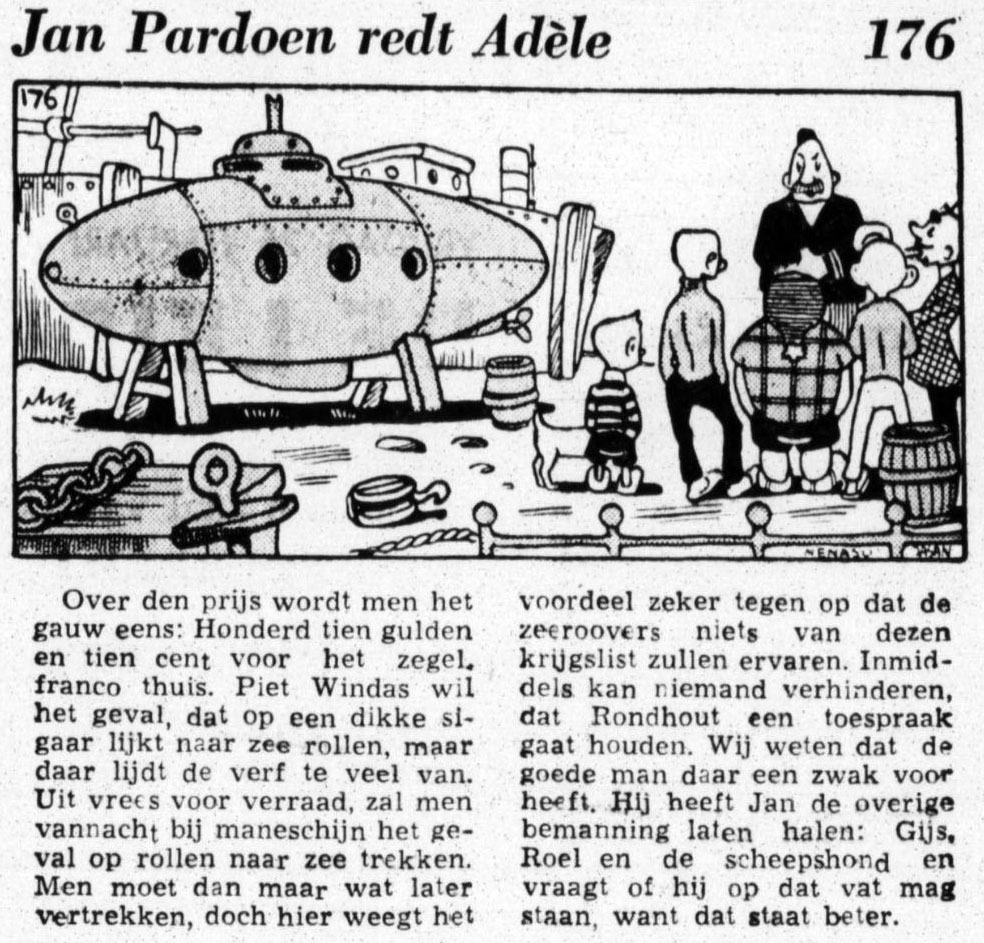
'Jan Pardoen', 21 February 1944.
The signature of "Jasan" appeared in the panels of the children's comic strip 'Jan Pardoen' (1943-1944), which ran in the Dutch national-socialist newspaper Het Nationale Dagblad. The strip was a production of Studio Nenasu, the art studio of the Dutch Nazi party NSB. Nothing else is known about the artist's identity, life or career before or afterwards.
Nenasu
When on 22 and 23 July 1943 the 'Jan Pardoen' strip was announced in the newspaper Het Nationale Dagblad, the illustration had the credit byline "Studio Nenasu". The Nenasu ("Nederlandse Nationaal-Socialistische Uitgeverij") was the Dutch national-socialist publishing house, based in Utrecht and founded in 1934 by Anton Mussert, head of the Dutch Nazi party NSB. The company was responsible for several national-socialist magazines - the weekly Volk en Vaderland was the best-known - as well as booklets and pamphlets with Nazi-related content. When Nazi Germany occupied The Netherlands in 1940, Nenasu became the most prominent provider of Nazi and Fascist propaganda in the country. In addition, the Nenasu art studio was responsible for the illustrations and comic strips in Het Nationale Dagblad, the newspaper of the NSB party, published between 1936 and 1945.
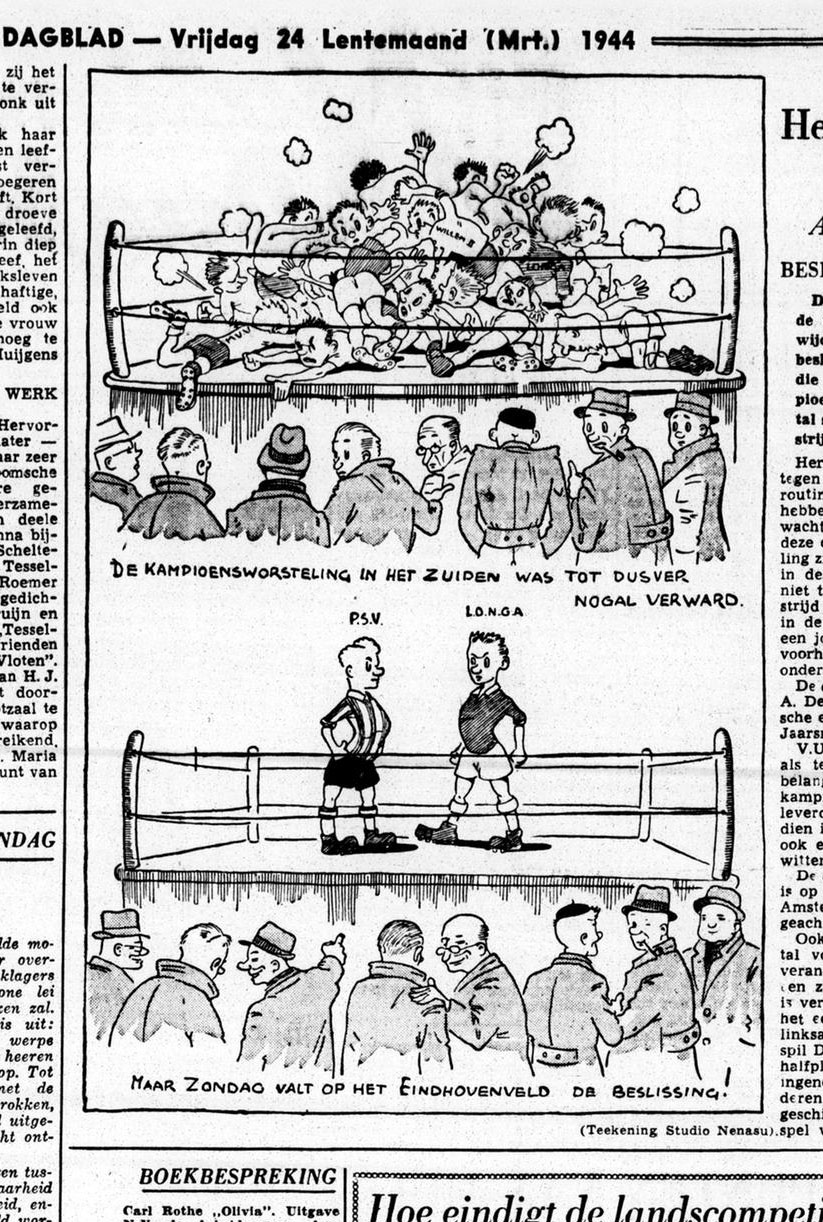
Cartoon credited to "Studio Nenasu" in Het Nationale Dagblad of 24 March ("spring month") 1944.
It seems likely that there were more graphic artists and illustrators working in the studio, although the paper's topical cartoons were only credited to "Studio Nenasu". However, the early episodes of the comic strip 'Jan Pardoen' (1943-1944) were signed inside the panels with "Nenasu-Jasan", making it possible that Jasan was the pen name for a yet unidentified artist. Later installments of the feature were signed with only "Nenasu", so perhaps by then another artist was on duty. Among the further cartoonists who worked for Nenasu publications were Peter Beekman, Cor van Deutekom and Nico den Hertog.
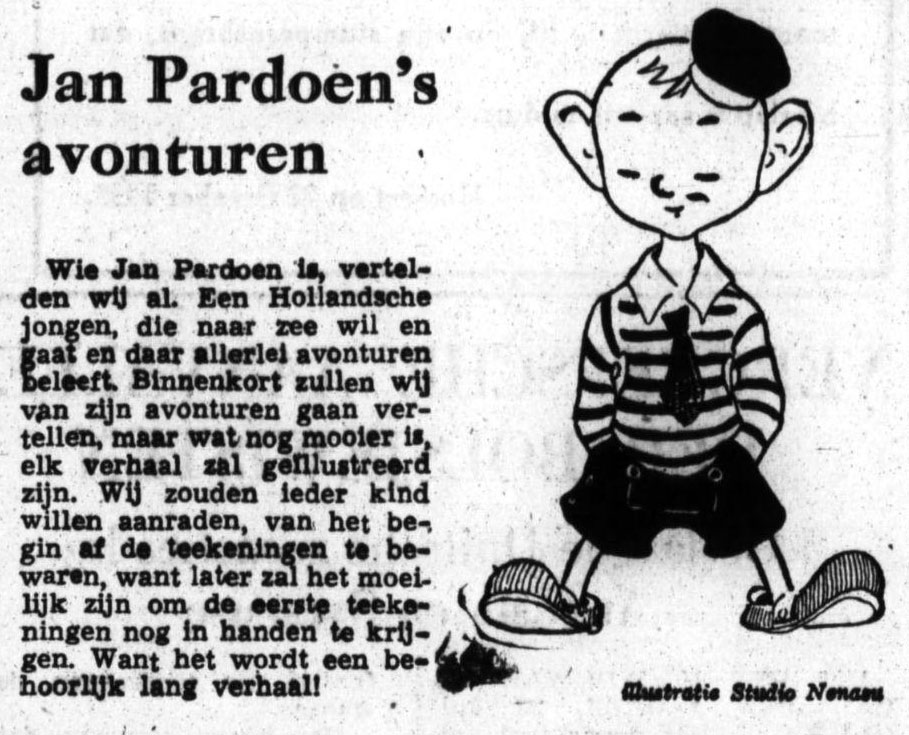
Announcements appeared in the editions of 22 and 23 July 1943. This one is from 23 July.
Jan Pardoen
Between 26 July 1943 and 23 October 1944, the children's adventure strip 'Jan Pardoen' was serialized in Het Nationale Dagblad. Even though it was printed in a Nazi-controlled newspaper, the feature in itself was remarkably free from any propaganda elements and basically a straightforward children's adventure comic series about a Dutch boy. Little Jan comes from a sailor's family, so many stories send him off on sea voyages. Storywise, the young hero encounters all the usual suspects one can expect in a children's story of that time period. Jan's journeys bring him to distant countries and deserted islands, where he is confronted with all kinds of stereotypical enemies, like pirates, Arabs, tribal Africans and Native Americans.
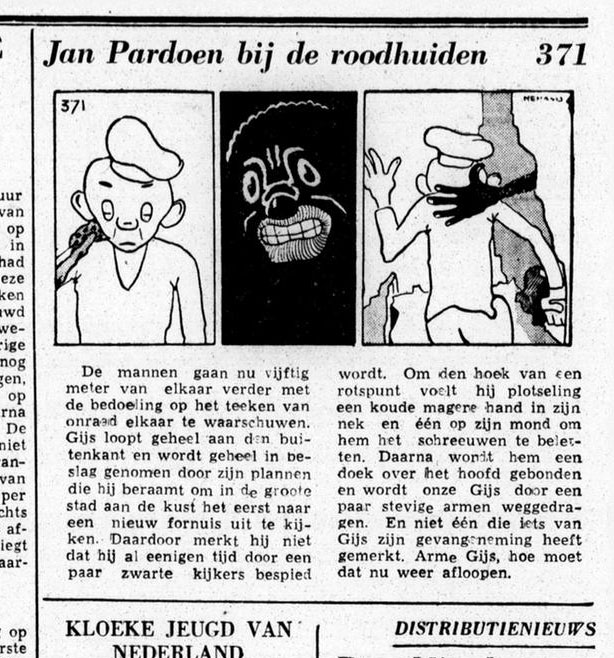
'Jan Pardoen' strip of 11 October 1944. By then, the strip was only credited to "Nenasu".
Over the course of a year, twelve narratives of 'Jan Pardoen' were serialized in 381 episodes, all presented in the traditionally Dutch text comic format, with the narration printed underneath the images: 'Jan Pardoen en de Zeerovers', 'Op de Ebbenhouteneilanden', 'Jan Pardoen Naar De Zuidpool', 'Jan Pardoen Huistoe', 'Jan Pardoen Redt Adèle', 'De Schatten van den Sultan', 'Naar Het Onderzeesche Paleis', 'Naar De Onbekende Wereld', 'Jan Pardoen Bij de Roodhuiden' and 'Jan Pardoen Bij Zwarte Mannen'.
Aftermath
In September 1944, the Southern half of The Netherlands was liberated by the Allied Forces. Since the Nazi armies fought back in a final act of desperation, the Northern half of the country remained under Nazi occupation for another grueling half year. Het Nationale Dagblad kept appearing until the entire country was finally liberated in May 1945. Nevertheless, the adventures of 'Jan Pardoen' were already discontinued in October 1944. It is unknown what happened to Jasan or the other anonymous staff artists of Studio Nenasu. They were most likely arrested for Nazi collaboration, and sentenced to a twenty-year publication ban, like many of the paper's journalists were. But since it is unknown, and will remain unknown, who Jasan was, it is also possible that he got off scot-free and had a further career in illustration under his real name.
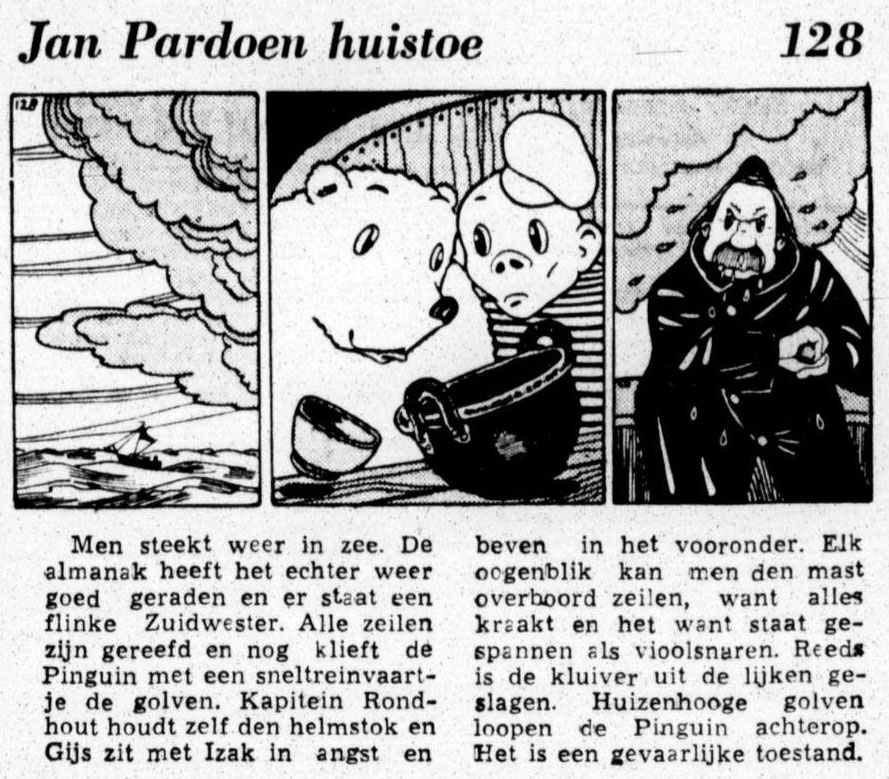
'Jan Pardoen' (23 December 1943).