


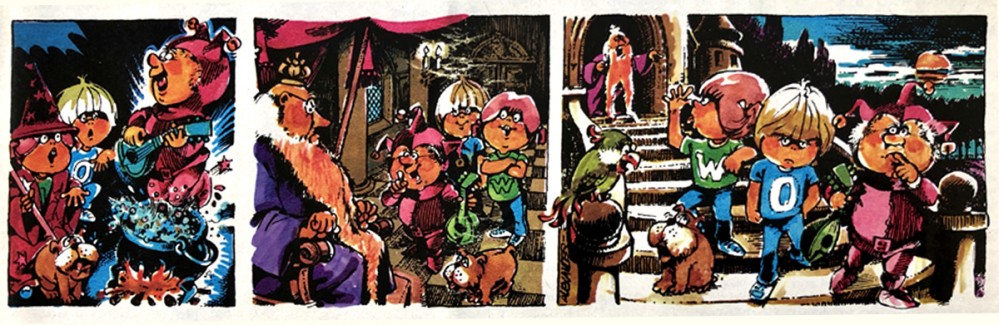
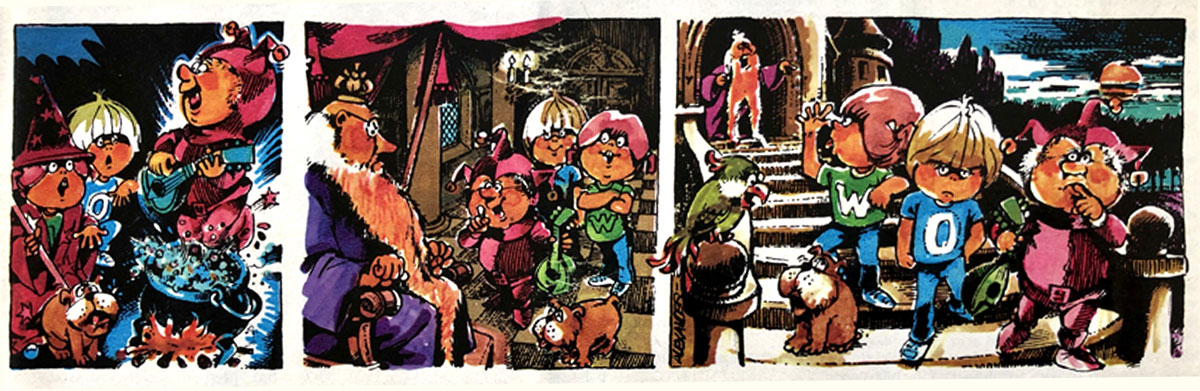
'Oelewapper'.
Lex van Voorst was a Dutch poster artist, illustrator, monumental designer, graphic artist and cartoonist, often using the pen name Alexander. For Verkerke Reprodukties, he was a pioneer in designing Dutch commercial posters, and his cartoons and illustrations appeared in school books, newspapers and magazines. A regular illustrator of NCRV Gids, he also created the comic 'Oelewapper' (1974-1976) for this TV guide, an "interactive comic for children".
Early life
Alex Sander van Voorst was born on a farm in Ede in 1930, as the youngest of six children of Jacobus van Voorst and Jannetje Davelaar. He came from a Reformed family, but quickly developed his own perspective on numerous life questions and problems. The countryside of his hometown inspired the young artist, and he often went on long walks. After World War II, he joined the local Scouts, and then studied at the Arnhem Academy of Fine Arts (1947-1953), majoring in illustration and graphics. One of his teachers was the graphic artist Hendrik Valk Jr. Upon graduation, he received the 1953 Academy Prize and graduated with a specialization in children's book illustration. In 1953, he met Corrie Bos, who had just graduated from the Rotterdam Art Academy. Three years later, the couple married, and they had two sons.
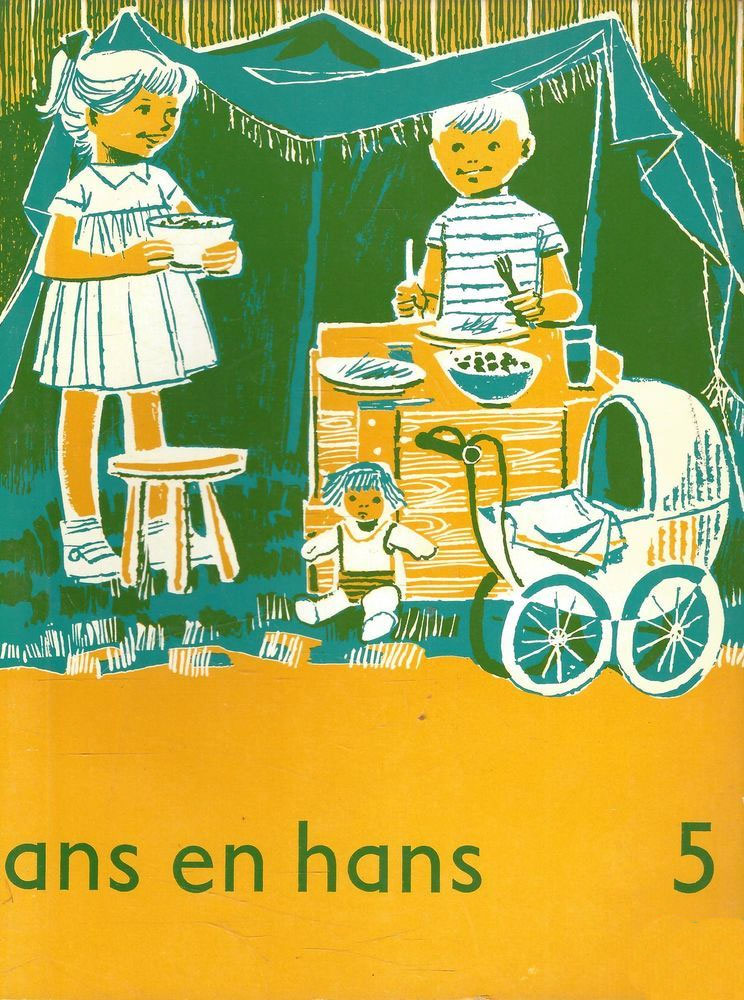
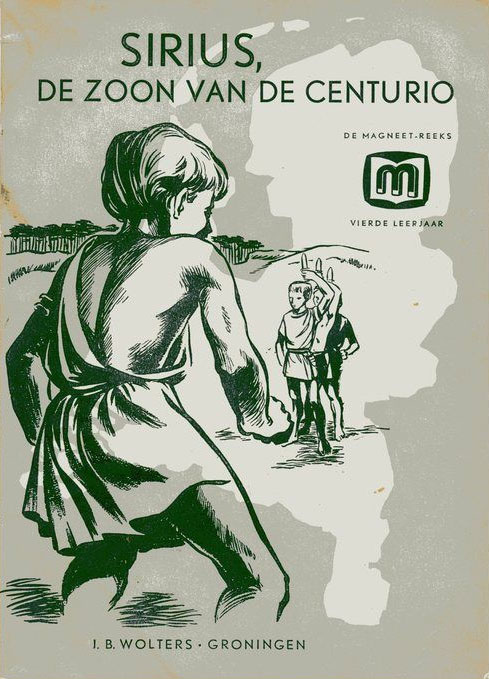
Cover illustrations for school reading books.
Children's books
Professionally, Van Voorst began his career working for the pharmaceutical company Organon in Oss as an advertising illustrator. He spent two years with the company - from January 1954 to December 1955 - and then became a self-employed artist. He quickly became notable as an illustrator of school books, working for publishers like J.B. Wolters and Samsom on reading books and educational methods like 'Ans en Hans' (six volumes), 'Bonte Kralen' (three volumes) and the 'Magneet' series (twelve volumes, 1956-1960). For the publisher Wolters Noordhof, he notably illustrated the children's books 'De Tocht met de Zwaan' (1960) and 'Het Kamp aan de Dinkel' (1963) by writer W. ter Horst.
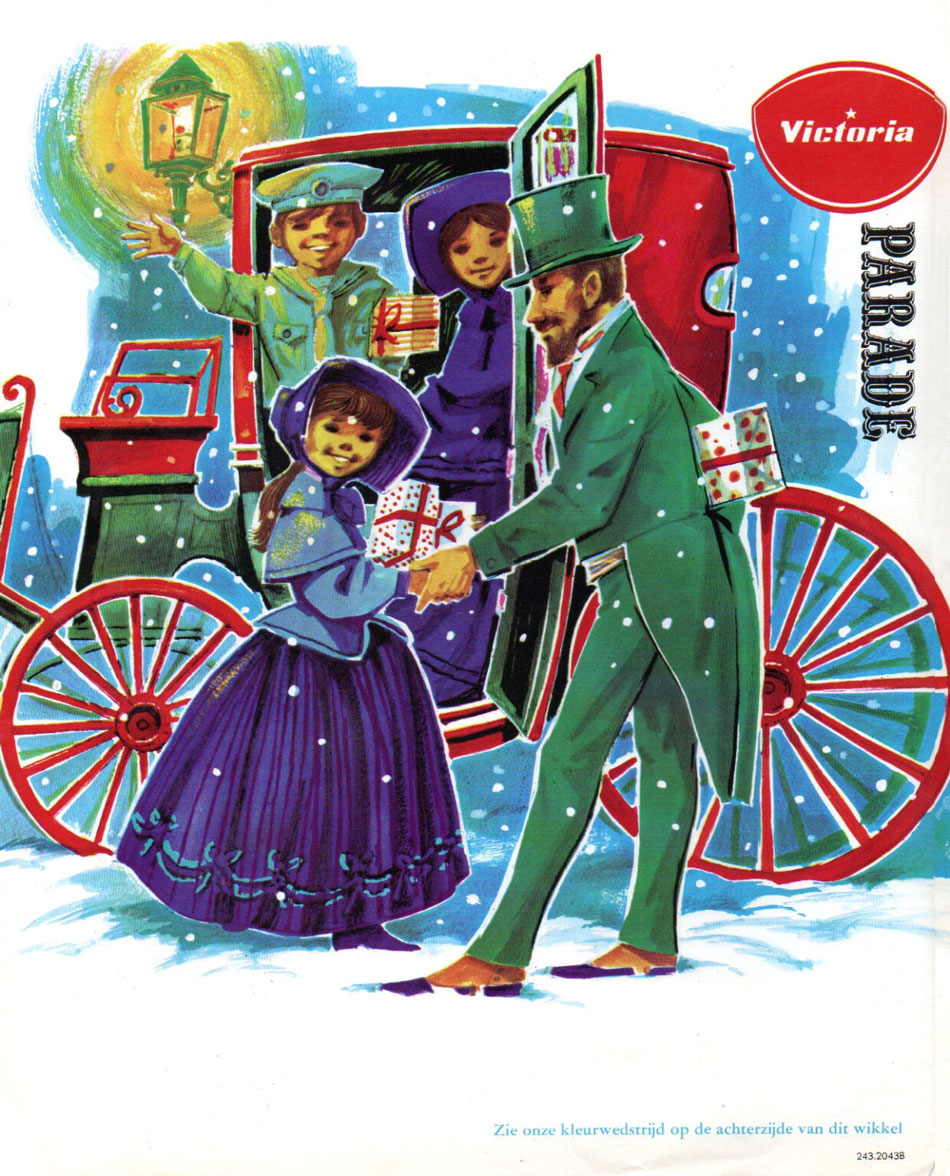
Artwork for Victoria biscuits.
Verkerke posters
During his professional life, Van Voorst worked as a graphic designer and illustrator for several corporations and brands. Among his regular clients was the Victoria biscuit factory in Dordrecht, where he did packaging design for biscuit boxes, among other things. From the start in 1967, Van Voorst was the in-house artist of the poster production company Verkerke Reprodukties in Ede, where he had his own studio. Led by Engel Verkerke, the company pioneered in the production of posters for a general audience, and quickly became European market leader.
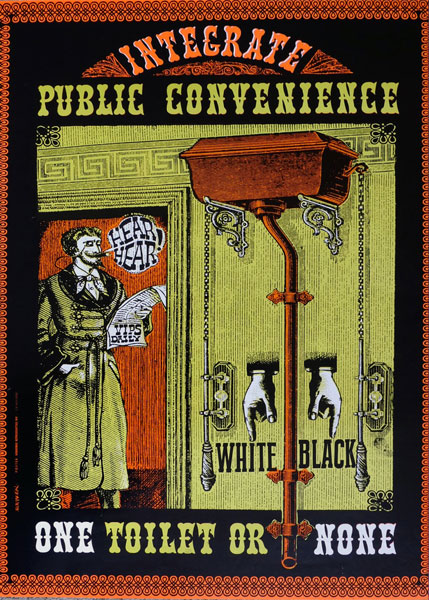
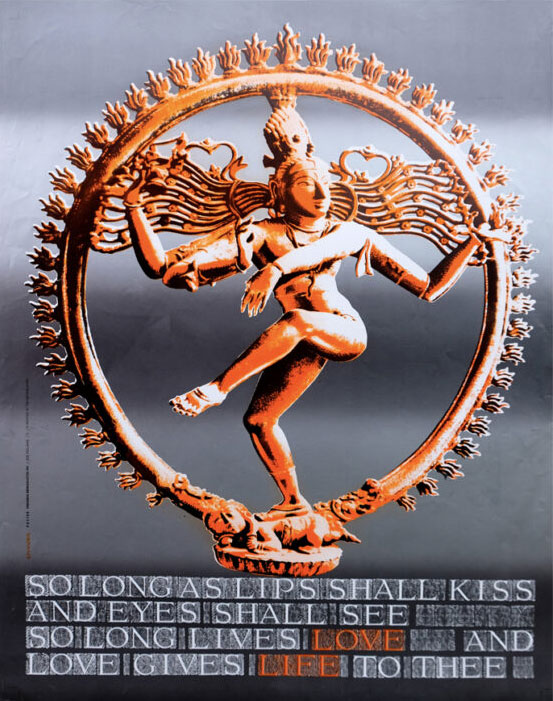
Poster designs for Verkerke.
Van Voorst designed much of the company's corporate identity, such as logos, exhibition stands and advertisements, but was also responsible for several iconic commercial posters of the 1960s and 1970s. A socially conscious artist, he had a preference for hippie-flavored posters with a social message or a soft spot for minorities. His Verkerke posters of empowering women like civil rights activist Angela Davis and theatre actress Sarah Bernhardt, or the psychedelic Ché Guevara poster became well-known. The 1967 poster 'One Toilet or None' called for no distinction based on skin color, and his 1971 'Peace' poster popularized the present-day international peace symbol. During the 1970s, Verkerke also pioneered blacklight posters, for instance with Lex van Voorst 'Cosmic Love' design.
Monumental art
Starting in the 1960s, Lex van Voorst also did a lot of monumental art, driving on the post-World War II "reconstruction period" percentage rule that "1.5% of the construction budget had to be spent on art". Inspired by Zero artist Jan Schoonhoven, the sculptor Günther Uecker, and the matter painter Jaap Wagemaker, he specialized in relief art, initially with linoleum or glass, later with cardboard and paper or even gravel. In 1974, Van Voorst's reliefs 'Haven' and 'House of Nomads' were purchased by the Municipality of Ede. His glass designs appeared in the Bethel Church and the local arts & crafts school.
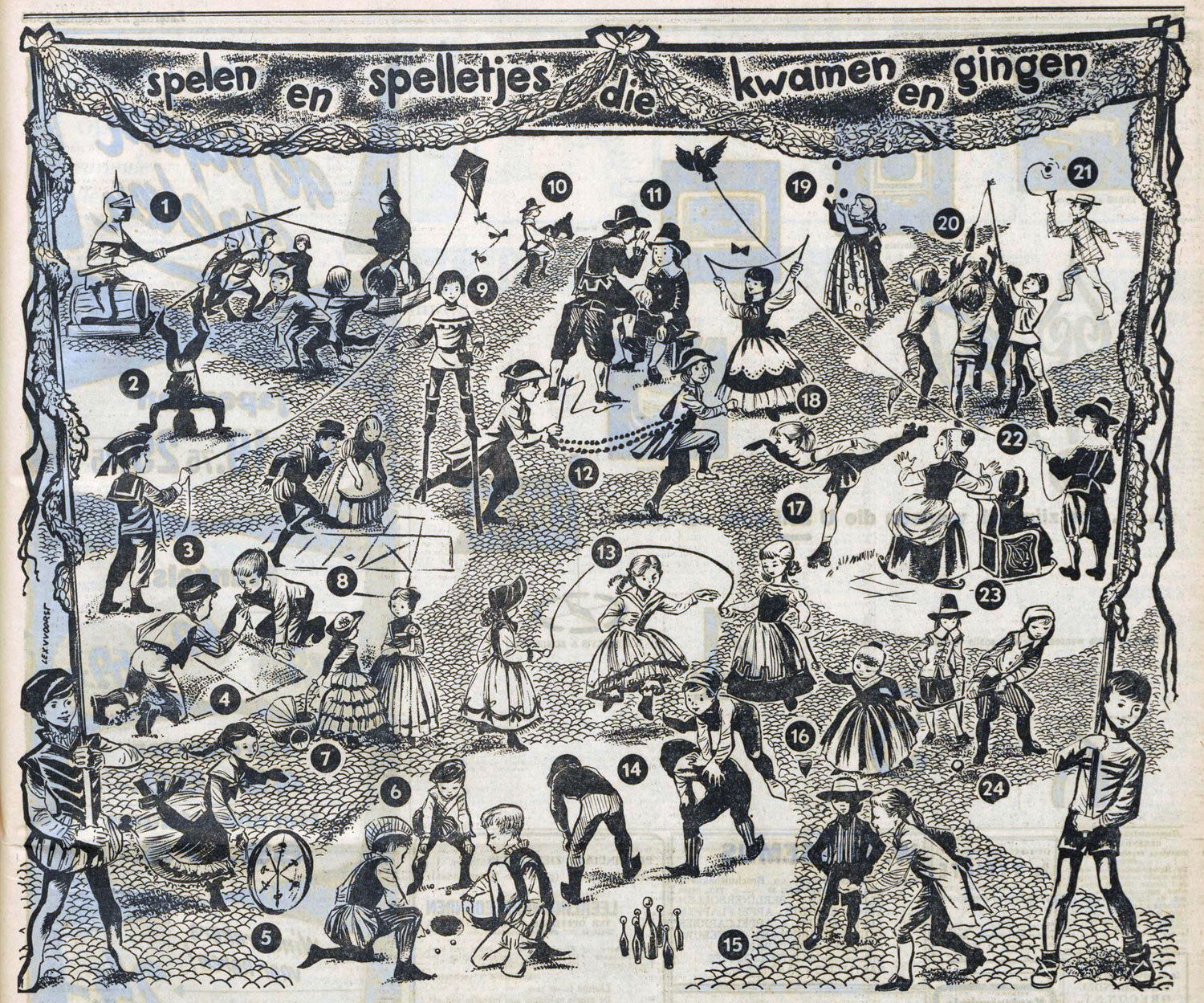
Illustration for newspaper Het Parool (29 December 1956).
Magazines and newspapers
In 1956 and 1957, Van Voorst was a regular text story illustrator for Robs Vrienden, the monthly comic magazine named after Pieter Kuhn's 'Kapitein Rob' character. By the late 1960s, his socially critical cartoons appeared in regional newspapers like De Gelderlander, Nieuwe Rotterdamsche Courant and De Limburger. His cartoons, created under the pen name Alexander, often presented a classic or well-known historical image with a humorous, contemporary twist. Van Voorst's social consciousness also found its way to the philosophical/spiritual magazine Kruispunt, and to Gezond Gezin, for which he made illustrations, not only for articles on parenting, but also dying and end-of-life care. He also provided regular illustrations and cover drawings to Boerderij, a weekly magazine for farmers. In addition to cartooning, Lex van Voorst was a columnist and art critic for the Christian cultural monthly Op De Uitkijk.
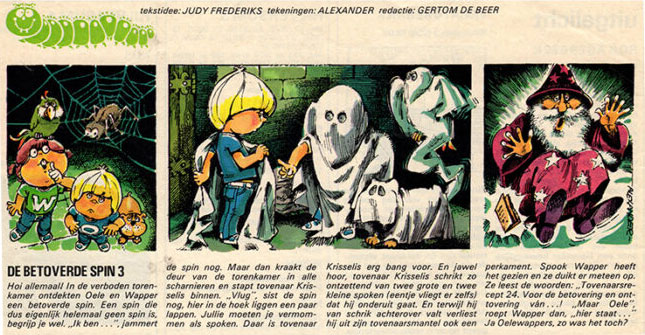
'Oelewapper'.
NCRV Gids
For a period of twenty years, Van Voorst was the house artist for the TV guide of the Christian broadcasting corporation NCRV. During this period, he created an estimated 15,000 illustrations for NCRV Gids. Every week, he visited the broadcaster's offices and created 15 illustrations on the spot to accompany current affairs and highlighted TV shows. His psychedelic drawings also appeared regularly on the magazine's covers. On the magazine's youth page Oelewapper, edited by Gertom de Beer, he introduced his comic series 'Oelewapper', also known as 'Oele en Wapper', about the magical adventures of a boy and a girl. Launched in 1974, the text comic feature was an innovative attempt at an interactive way to engage the young readership. Of each episode, the magazine first ran a three-panel sequence in black-and-white, inviting the readers to think up the story. In a following issue, NCRV Gids ran the same sequence in color, this time accompanied by the mailed-in story text, with the winner credited as writer. After two years, this original comic feature came to an end, due to the untimely death of Lex van Voorst.
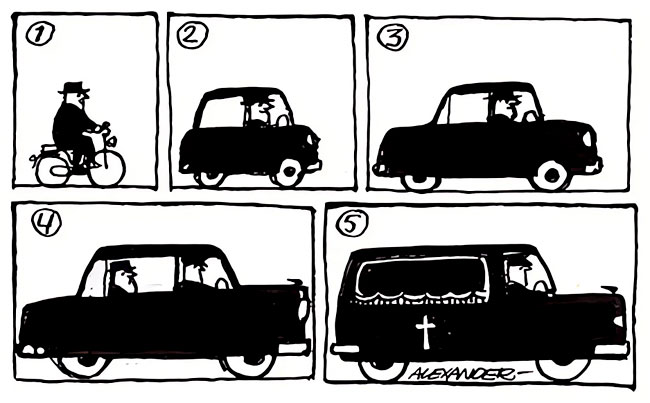
Sequential cartoon for NCRV Gids (1974).
Death
In his spare time, Lex van Voorst spent much time in the French Dordogne region, where he found inspiration and collected pebbles for his gravel reliefs. On 19 January 1976, the artist died suddenly of a heart attack in his hometown Bennekom. He was only 45 years old.
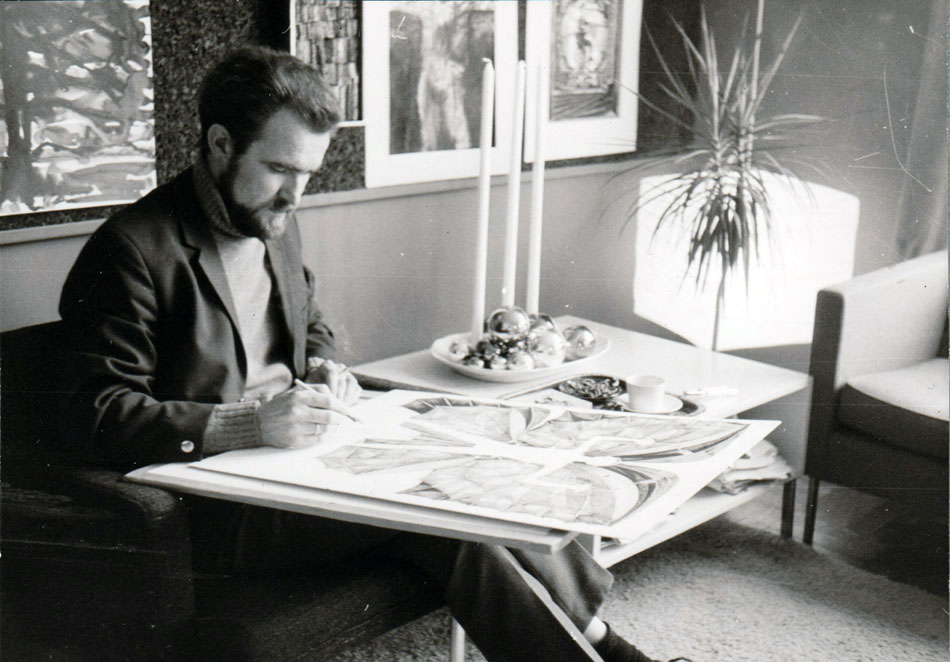
Lex van Voorst in his hometown of Bennekom in 1970.