


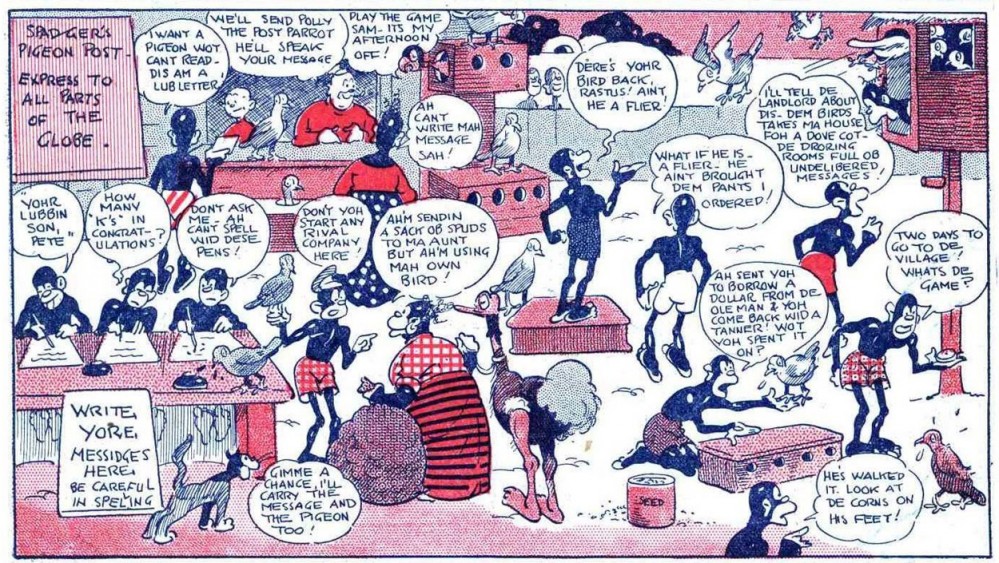
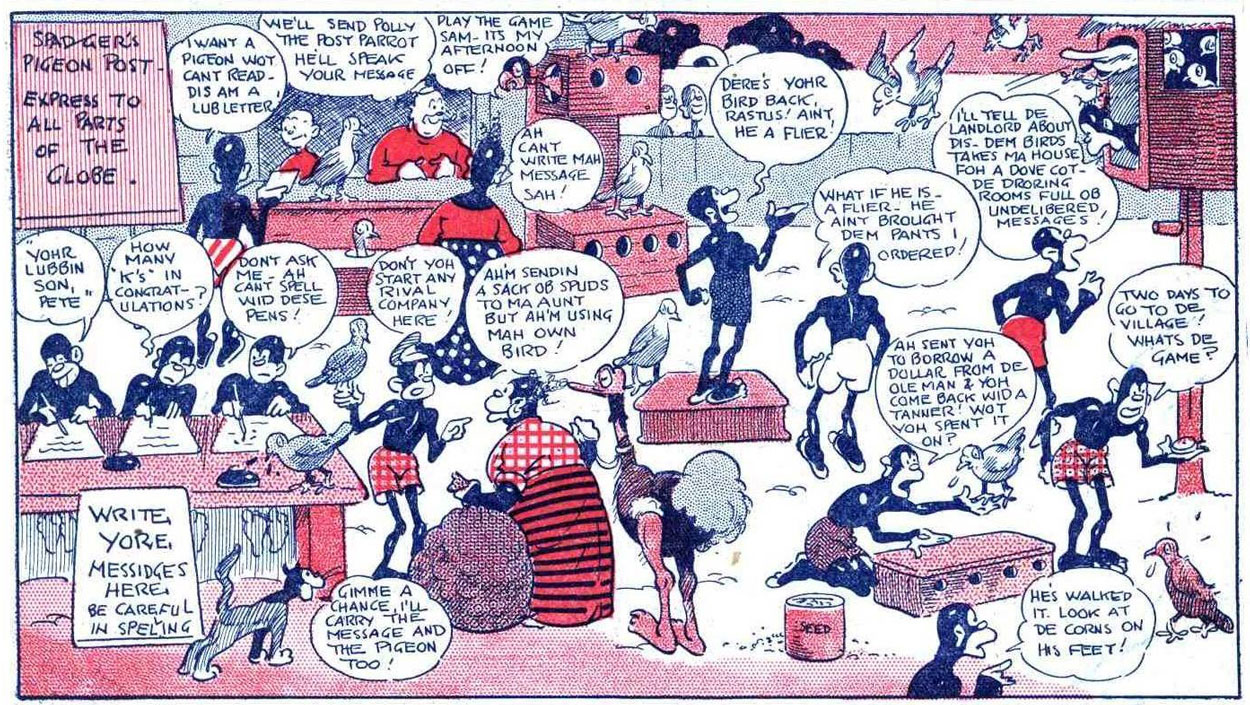
'Spadger Isle'.
Chick Gordon was a mid-20th century British cartoonist, and staff artist for publisher D.C. Thomson for nearly thirty years. His series appeared in several of the company's story papers. His most notable and longest-running series was 'Spadger Isle' (1931-1950) in The Wizard. Gordon was also one of the pioneering artists for The Dandy and The Beano.
Early life and career
Charles Henry Gordon was born in the first quarter of 1884 in Poplar, London, as the son of a customs clerk and a music teacher. His first name was generally shortened to "Chick" or "Chas". He later moved to the Scottish city of Dundee.
D.C. Thomson
In 1922, Chick Gordon became a staff artist with the publishing house D.C. Thomson. His brother Jack Gordon (1890-1965) was also hired, and the two remained employees of the company throughout the 1930s and 1940s. Chick Gordon drew many features for D.C. Thomson's children's story papers, starting with the one-panel cartoon 'Cheery Chinks' (1922) in The Rover. Two years later, he was present in Storyland for Girls with 'Polly's Pup' (1924) and 'Bessie's Brain' (1924).
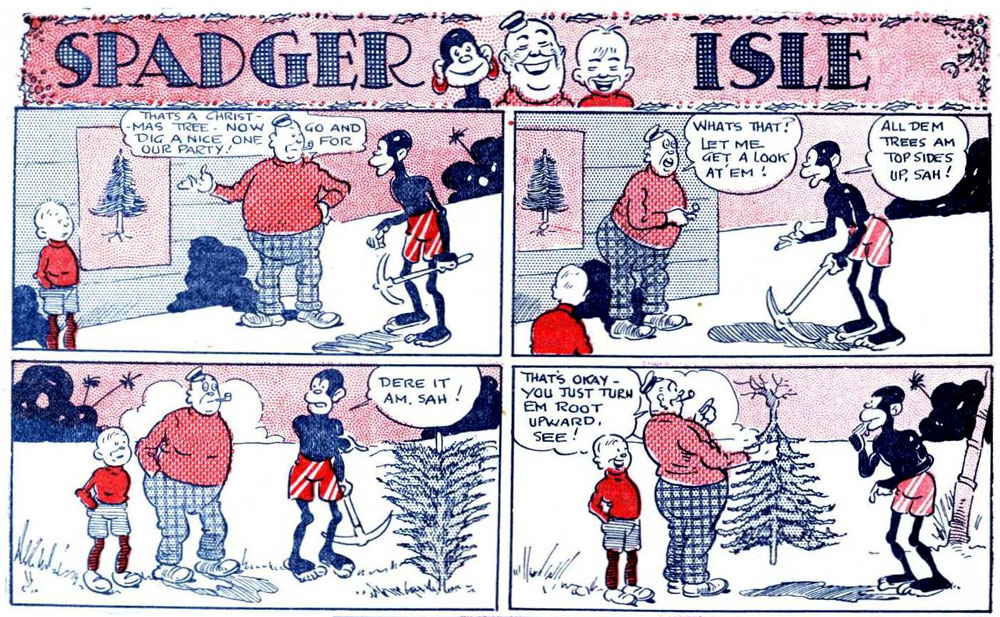
'Spadger Isle'.
Spadger Isle
By 1930, Gordon had taken over 'Spadger's XI', a kids' gang comic in The Wizard about a backyard soccer team, originally drawn since 1925 by S.K. Perkins. As the initial concept had worn out, Gordon sent the two main characters on a trip around the world. When they ended up on a deserted island, the comic's title was changed to 'Spadger Isle' (1931-1950). In true colonial fashion, Spadger and his companion Skipper Sam quickly started to anglicize a local cannibal tribe called the "Nigs". A product of its time, all natives were drawn stereotypically, talking in jerky speech.
Still, the change in setting made the series popular again. On 28 October 1939, the feature moved from the centre spread of The Wizard to its front page, where it appeared in color until 12 August 1950. Each page had a specific lay-out: four introduction panels and then one large, crowded drawing, in which all of the island's inhabitants and animals appear in comical situations related to that episode's subject.
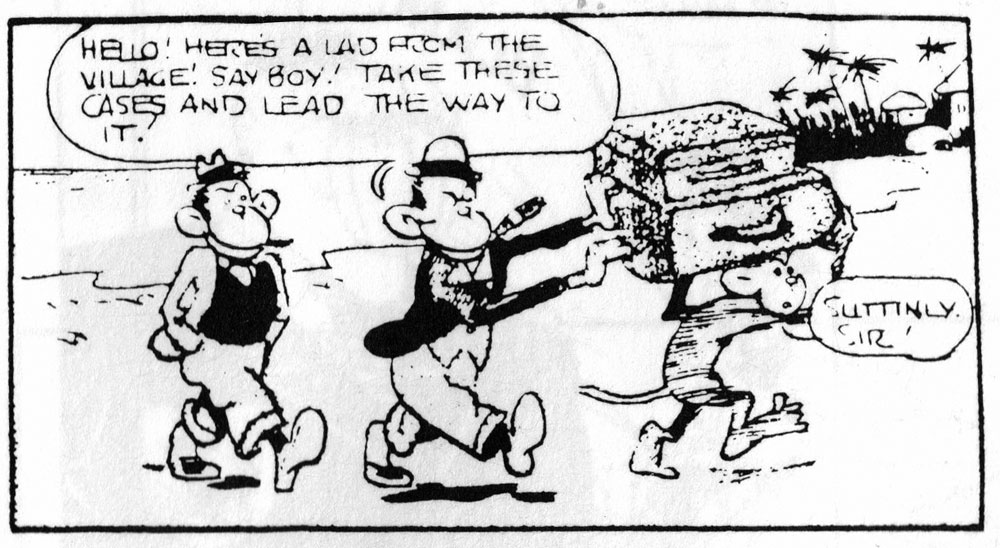
'Bamboo Town'.
Other features
Although 'Spadger Isle' was his main series, Chick Gordon's art appeared in several other titles too. For Adventure, he drew 'The Skyrocket Rovers' (1931), and The Rover published his strip 'PC 99' (1933). Gordon additionally made 'Folks of the Mulligan Mansions' for The Family Star, as well as many cover illustrations for annuals and seasonal books.
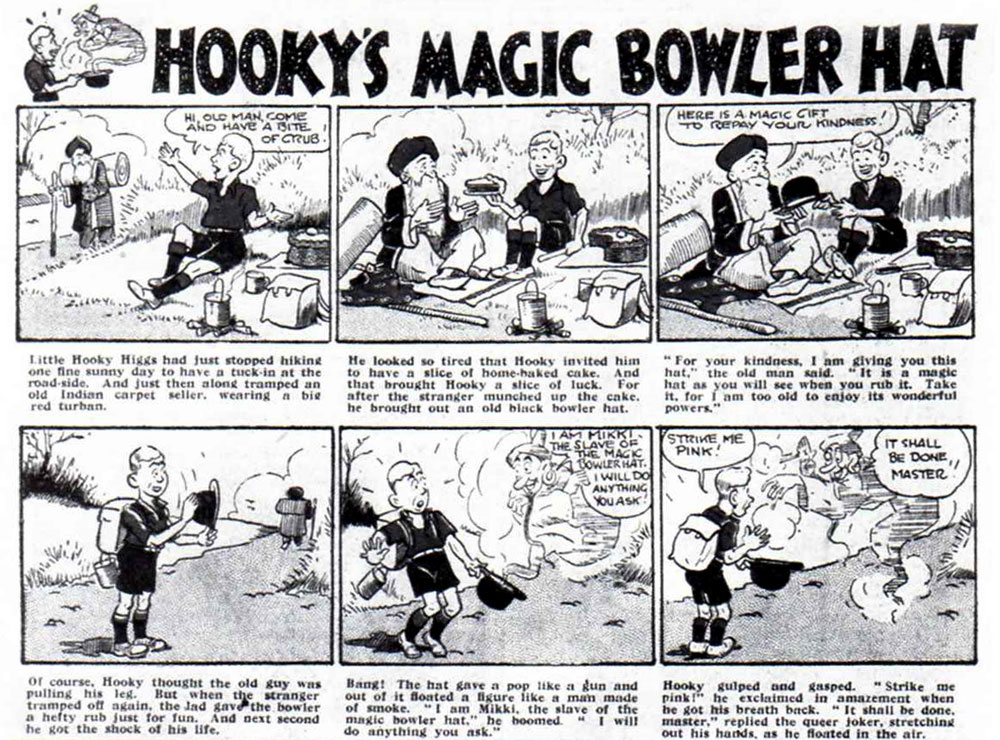
'Hooky's Magic Bowler Hat'.
The Beano and The Dandy
Gordon was also part of the original artists team of the long-running children's magazines The Dandy and especially The Beano. In the very first issue of The Beano (1938), he provided illustrations to 'The Wangles of Granny Green', a humorous text story about a boy pretending to be his own grandmother, who can nevertheless not resist giving in to his childish urges. Gordon also drew comic features, like 'Bamboo Town' (1937-1944), about two snappily dressed chimps who return to the jungle after being subjected to a civilizing spell in the Big City Zoo. Other series were 'Hooky's Magic Bowler Hat' (1938-1940), 'Little Peanut's Page of Fun' (1938-1940) and 'The Pranks of Peanut' (1939). Along with Sam Fair and George Drysdale, Gordon was one of the artists of 'Tin-Can Tommy' on The Beano's back cover. The strip about a professor and his "clockwork" son was originally created by the agency of the Italian brothers Tristano and Bubi Torelli, but the Scottish publisher lost contact with them after the outbreak of World War II.
For The Dandy, Gordon drew 'Captain Cutlass' (1944) and 'Bouncing Billy Balloon' (1948).
Death
Charles Henry Gordon passed away on 9 May 1952.
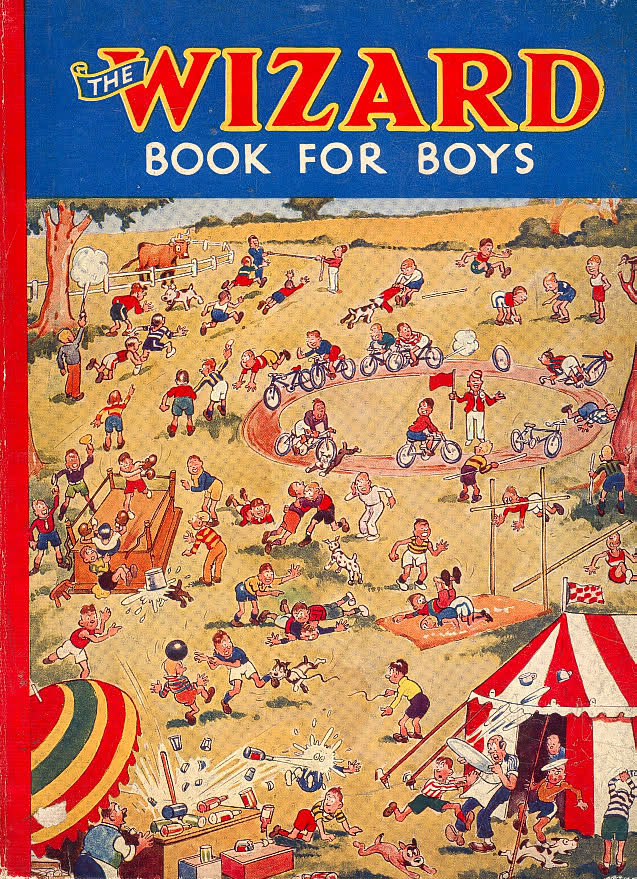
Cover illustration for The Wizard annual.