


First Howdy Doody strip by Chad (Grothkopf) and (Milt) Neil, St. Louis Dispatch, 15 October 1950.
Milt Neil was an American animator, toy designer, advertising artist and comic artist. During the 1930s and 1940s, he worked for Disney, mostly on Donald Duck cartoons. In 1950, he and Chad Grothkopf were co-artists on 'Howdy Doody' (1950-1953), a celebrity newspaper comic based on the popular children's TV show of the same name.
Early life and career
Milton Erwin Neil was born on 30 May 1914 in Irvington, New Jersey. His parents were of Polish descent. After graduating from Irvington High, he studied Illustration at the Pratt Institute in Brooklyn, New York. According to an article in The Star-Ledger of 7 November 1965, Milt Neil entered a contest organized by Walt Disney. Out of the 25,000 entries, Neil was one of the 20 winners.

Donald Duck sketch by Milt Neil.
Disney years
In 1935, Neil began his employment with the Walt Disney Studio's, where he mostly animated on Donald Duck cartoons, earning the nickname "The Duck Man" (incidentally, Carl Barks received the same nickname for his work on the 'Donald Duck' comics). Several were straightforward cartoons, like 'Contrary Condor' (1944), but during World War II, he also animated for the Allied propaganda cartoons 'Der Fuehrer's Face' (1943) and 'Fall Out-Fall In' (1943). In 'Der Fuehrer's Face', he worked on the scene where Donald gets out one measly coffee bean from a secret stash, trying to avoid being caught. The cartoon later received the Academy Award for Best Animated Short. Many of these animated shorts were directed by Jack King.
Neil also worked on the Donald Duck segments in the feature films 'Saludos Amigos' (1942) and 'The Three Caballeros' (1944), in which the duck visits respectively Brazil and Mexico, meeting respectively the playboy parrot Jose Carioca and the cowboy rooster Panchito Pistoles. Both movies combined animation with live-action and were made to appeal to the Latin American audiences, since World War II had cut off Hollywood's international market in Nazi-occupied Europe, where the Axis had banned U.S. and British media. In later decades, José Carioca and Panchito starred in their own comic features, produced by international Disney licensees.
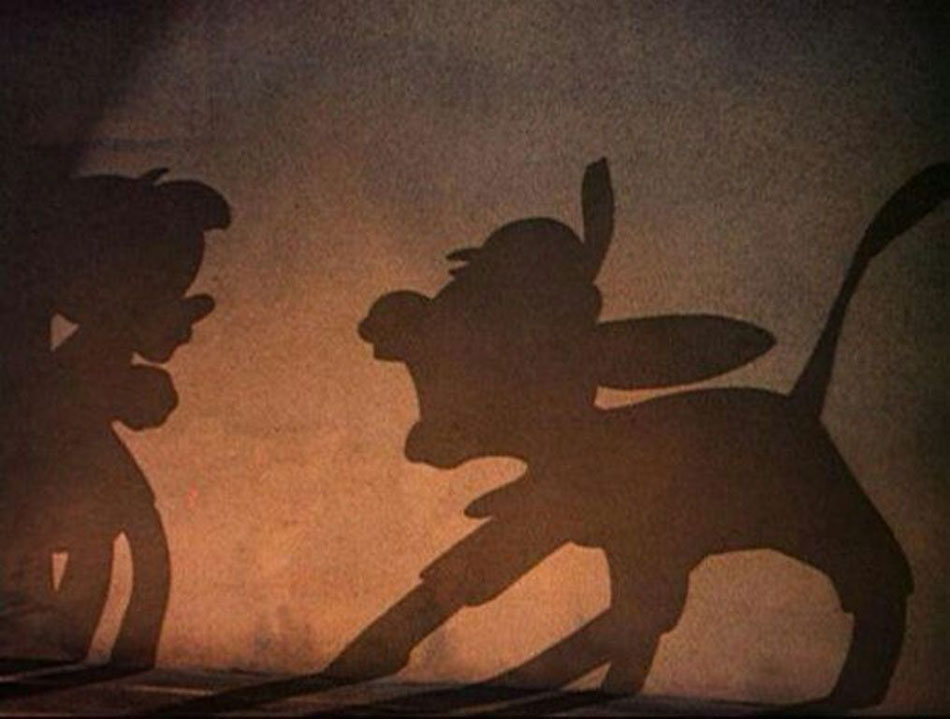
Donkey transformation scene from 'Pinocchio' (1940).
Although mostly assigned to Donald Duck cartoons, Neil also animated on the 'Silly Symphonies' cartoon 'The Ugly Duckling' (1939), which also received an Academy Award for Best Animated Short. He additionally worked on the 'Goofy' sports cartoon 'How to Play Baseball' (1942) and various classic animated features. For 'Pinocchio' (1940), Neil contributed to the scenes on Pleasure Island, in which the naïve marionette and his friend Lampwick are having fun in a bar until they transform into donkeys. This particular moment has traumatized generations of young viewers. In 'Fantasia' (1940), Neil helped out with the 'Pastoral Symphony' segment, designing some scenes with the cherubs and centaurs. However, some of his animation has nowadays been removed. Neil designed the African-American centaurs Sunflower and Otika, who, contrary to the other ones, aren't adults but young girls, with an unfortunately stereotypical look, comparable to "pickaninnies". They are depicted shining hooves and rolling out a carpet. With the 1969 re-release of 'Fantasia' in theaters, all the scenes with Sunflower and Otika were cropped, so that they don't appear in the frame. This has remained the only available version since in all of the film's re-releases. Though the scene featuring two adult black female centaurs heralding the god Bacchus was deemed acceptable and kept.
Neil also worked on the scenes in 'Dumbo' (1941) in which Dumbo is rejected by the other elephants and the one where Timothy Mouse whispers in the ringmaster's ear while he's asleep. In the anthology film 'Fun and Fancy Free' (1946), he animated Donald Duck in the 'Mickey and the Beanstalk' (1947) segment. The scene where Donald freaks out from starvation is another nightmarish moment that disturbed generations of young viewers.
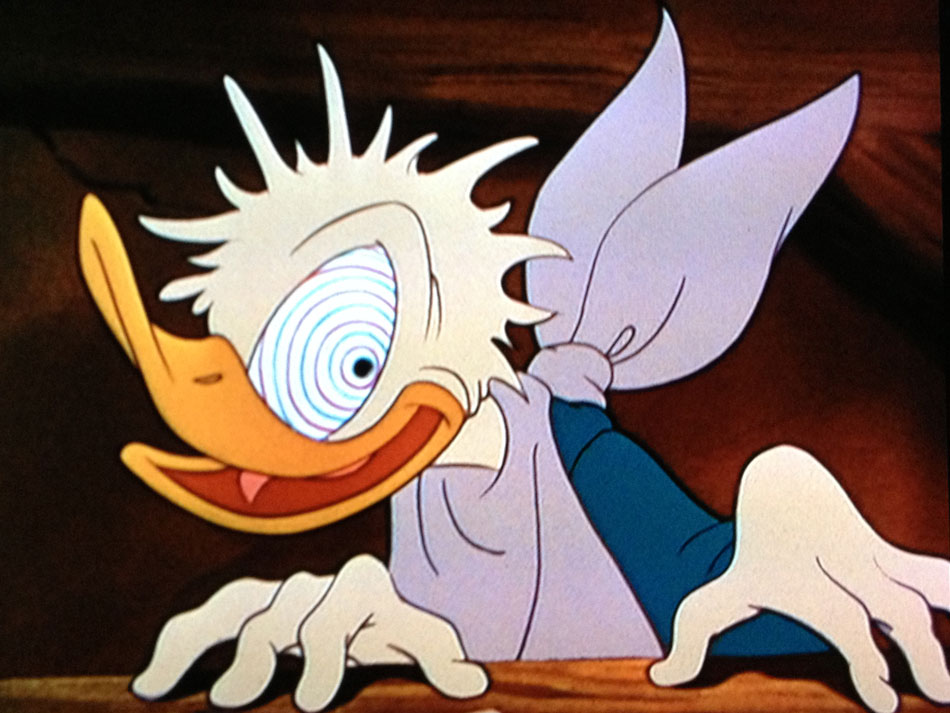
Donald freaks out in 'Mickey and the Beanstalk'.
World War II
During his Disney years, Milt Neil also did his military service during World War II. Already during the 1930s, he had taken his first flying lessons at the old Westfield Airport in Jersey, and then continued his training on the West Coast. By the time the USA entered World War II after the attack on Pearl Harbor, Milt Neil was recruited in the U.S. Air Force, serving as a pilot and bombardier. Later, he also made training films on the maintenance of the Norden bombsight and on other topics like low altitude bombing and basic maneuvers.
Commercial artist and entrepreneur
In 1946, Neil left Disney and set up his own shop as a commercial artist. He became a packaging and merchandising designer for commercial products. An important client was the Unique Art Manufacturing Company in Newark, New Jersey, for which Neil designed children's toys. He also redrew the two cartoon chefs Hap-Pea and Pea-Wee, which were used in advertisements by Pea Soup Andersen's. In addition to his work as an artist, he showed his entrepreneurial skills by running The Laguna Beach Club and the Holster Restaurant, both on Route 23 in Wayne, New Jersey.
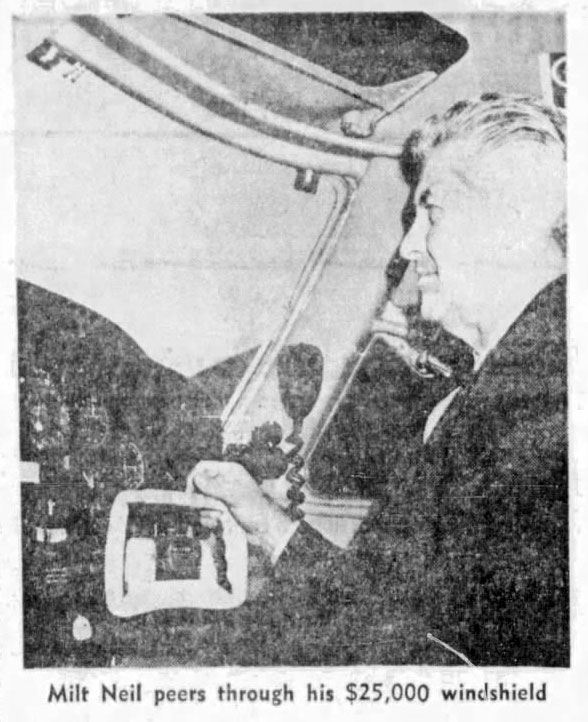
Milt Neil as a pilot, portrayed in The Star-Ledger of 7 November 1965.
During the 1950s, he worked on some of the first TV commercials, and also participated in other TV projects. It is believed that Milt Neil contributed to the animated intro of the popular sitcom 'I Love Lucy' (1951-1960) starring Lucille Ball. Between 1951 and 1955, each episode featured an intro where caricatured versions of Lucy (Lucille Ball) and Ricky (Desi Arnaz) introduced the credits and promoted the show's sponsor, Philip Morris cigarettes. Other names that have been mentioned in relation to the 'I Love Lucy' intro were MGM studio employees William Hanna, Joseph Barbera and Gene Hazelton. Also during the 1950s, he briefly worked as an animator for Walter Lantz' studio, participating in the production of such shorts as 'Dig That Dog' (1954) and 'Broadway Bow Wow' (1954).

Postcard for Andersen's pea soup, starring the characters Hap-Pea and Pea-Wee.
Howdy Doody
In the early 1950s, Milt Neil was involved with one of the earliest children's TV shows, 'Howdy Doody' (1947-1960), created by E. Roger Muir. Howdy Doody was a talking marionette who welcomed viewers and acted as narrator. The rest of the program was set in a circus tent, where a cowboy and clown provided antics to entertain the children. Howdy's puppet originally had a very rough design, but Neil carved it into a more appealing form. He also designed the characters of Flub-a-Dub, Mr. Bluster and Dilly Dally. Since he already worked for a toy designing company himself, Neil convinced his superiors to sign a merchandising deal, making him the official designer of all 'Howdy Doody' toys, games, clothing and cereals, as well as a comic strip.
Syndicated by United Feature, the newspaper comic adaptation of 'Howdy Doody' debuted on 15 October 1950. Initially, Milt Neil and Chad Grothkopf created the comic together, with Allan Holtz's guidebook 'American Newspaper Comics' mentioning Neil as writer and Grothkopf as artist. From 10 December on, Grothkopf took over completely. The later scripts were written by Edward Kean in collaboration with a still unknown Stan Lee. Grothkopf continued 'Howdy Doody' until 21 June 1953. In addition, Mel Crawford was one of the artists working on the 'Howdy Doody' comic book by Dell Publishing.
Noteworthy is that 'Howdy Doody' was broadcast in front of a live children's audience, named the "Peanut Gallery". This motivated editors of Charles M. Schulz's comic strip 'Li'l Folks' to rename his series to 'Peanuts', just before the first episode was published on 2 October 1950. Schulz himself was never happy with this new title, since they never asked him about his opinion. Around the same time, 'Howdy Doody' was also satirized by Harvey Kurtzman and Will Elder as 'Howdy Dooit' in Mad Magazine, issue #18 (December 1954).

'Howdy Doody' cast print.
Final years and death
Later in his career, Neil was an art teacher at the Joe Kubert School of Cartoon and Graphic Art, where one of his pupils was Bill White. Milt Neil expressed admiration for British comic artist Paul Trevillion, whom he named "the master of movement (...) It would take a Disney artist 20 pages to produce the movement that Paul captures in one drawing."
Milt Neil passed away in 1997 at the age of 83 in Passaic, New Jersey.
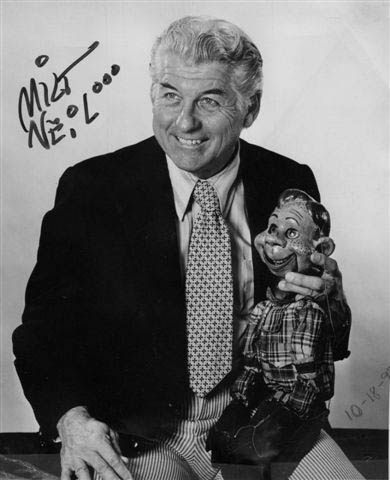
Milt Neil with Howdy Doody puppet.