


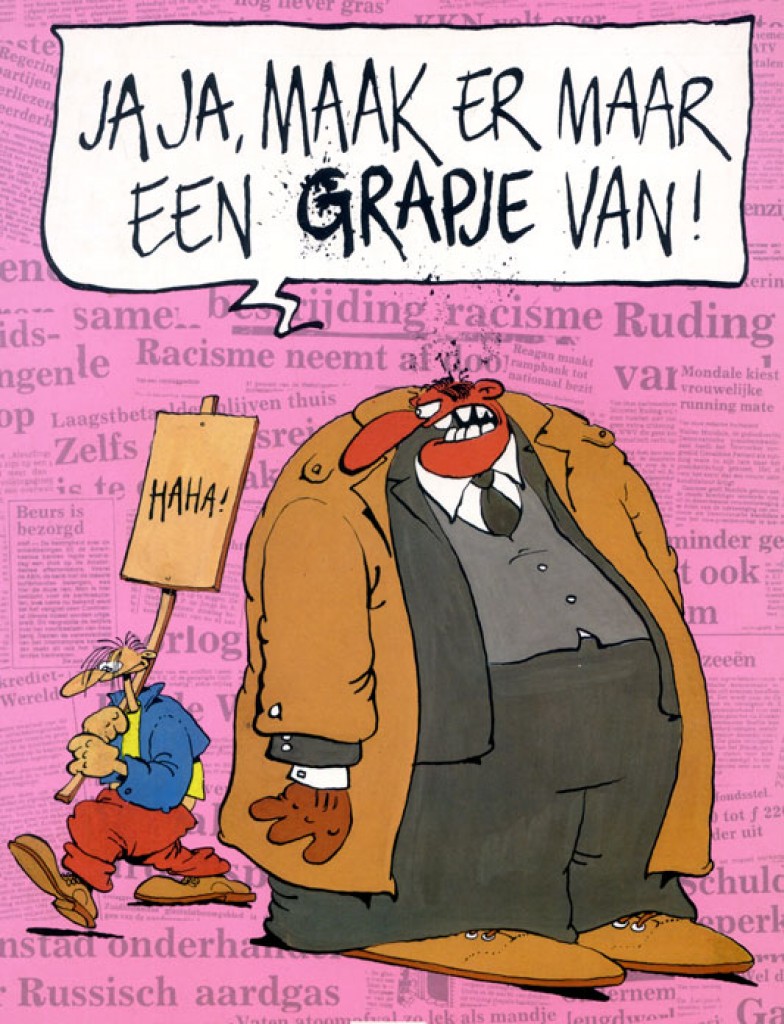

Cover illustration of 'Ja Ja, Maak Er Maar Een Grapje Van!' (Espee, 1984).
Wim Stevenhagen is a Dutch comic artist, political cartoonist and commercial illustrator, who has mostly worked on commissioned comics for institutions and companies. Early in his career, he formed the duo "Prutswerk" with Gerrit de Jager, with whom he started out making comics for Dutch alternative comic magazines of the 1970s, such as De Vrije Balloen and Gummi. Among their earliest joint creations were the raw humor strips 'Prut Pruts Private Kreye' and 'Han Gewetensim', followed by the edgy family comic 'De Familie Doorzon' in Nieuwe Revu (1980-1982). With De Jager, Stevenhagen also collaborated on the school magazines of the publishing house Malmberg, creating 'Sulle Hooms' (1978-1982), 'Roel en Zijn Beestenboel' (1978-1984) and, on his own, 'Bert J. Prulleman' (1983-1984). Since the break-up of the Prutswerk team in late 1982, Stevenhagen has continued 'Han Gewetensim' as 'Han & Hanneke' (1981-1983) in School-TV-Weekjournaal and De Waarheid, while creating numerous comics for trade journals for education professionals, the graphic arts industry and action groups. Among Wim Stevenhagen's most notable characters have been 'Bertus Braafjes' for Milieudefensie (1984), 'Deventer' for Panorama magazine (1985), the political strip 'Bestuurscontacten' in Het Parool (1986-1988), 'Henk Vanderspatie' for the graphic arts magazine Pers (1988-?) and 'Theo de Buurtconciërge' for the SP party magazine Tribune (1996-2021).
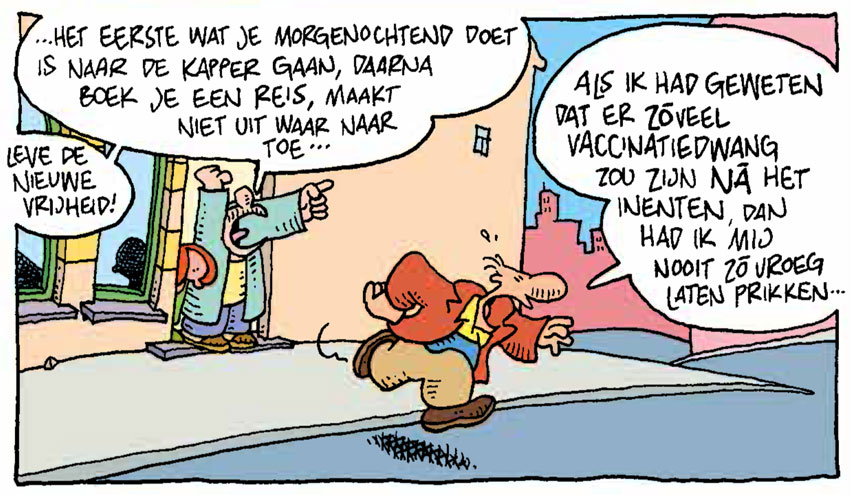
'Theo de Buurtconciërge' (SP Tribune, January 2021).
Early life and career
Wim Stevenhagen was born in 1954 in Haarlem into an artistic family. Largely raised in Amsterdam, he lived in the same neighborhood as Gerrit de Jager, with whom he shared a fascination for comics and drawing. Friends since the age of three, the two boys attended the same elementary and high schools, and began their collaboration by making comics and cartoons for the school newspaper. For their comics, they found inspiration in the work of Robert Crumb, Charles M. Schulz, Don Martin and Michel Greg's 'Achille Talon' comics. Interviewed in Stripnieuws #54 (March 2014), De Jager reflected that, back then, he regarded Stevenhagen's drawing style and comedic ideas far superior to his, so he learned a lot from his friend. On 19 June 1971, newspaper Het Parool recognized the talent of the sixteen-year old Stevenhagen, when it printed one of his crowded and highly detailed cartoon drawings. The accompanying article also mentioned a special comic issue of his school paper NX he had just made with his friend De Jager.

Crowded picture by a teenage Wim Stevenhagen, published in Het Parool on 19 June 1971.
Between 1972 and 1978, the duo studied Audiovisual Media at the Rietveld Academy in Amsterdam, where they later attended the "experimental animation" section. Among their fellow students were the future comic creators Lex van de Oudeweetering and Paul Schindeler. While still students, Stevenhagen and De Jager were asked to make animated segments to visualize a question in the TV quiz 'Twee Voor Twaalf'. Between 1975 and 1979, they produced four one-minute animations per month. Later on, the duo also made animated segments for the educational 'Schooltelevisie' broadcasts. Still during their student years, the two young artists had their first comics published. At the Academy, De Jager used all of these professional jobs for his final exams and graduated effortlessly. Stevenhagen, on the other hand, was by then already kicked out of the Academy. However, He took this as a badge of honor, since many "real artists" had also been rejected.
Prutswerk
During the first years of their professional careers, Stevenhagen and Gerrit de Jager remained an inseparable duo, working under the collective name "Prutswerk" (Dutch for "shoddy work") as a sort of Lennon-McCartney of comics. Their ironic pseudonym referred to their working methods. Since they had to whip out so much artwork on deadline, they divided the workload. Officially, Stevenhagen sketched out the pages, since he was better at doing lay-outs, while De Jager did the finished art with pencil and ink. However, this wasn't an ironclad law: if one of them was unavailable, the other filled in. Their artwork was barely distinguishable, except for a few specialties. Stevenhagen, for instance, enjoyed drawing cars more. At first, the duo was concerned that they didn't slave away on their pages, compared with professional cartoonists. Feeling obliged to fill up their panels, they started adding more background details, like thumbnails on the floor. These latter objects turned into a running gag. Initially, the duo considered organizing a Prutswerk studio to raise the production value, bringing in as extra contributors fellow Rietveld students like Paul Schindeler, Marianne Hoogstraten and Fay Luyendijk (who later became known as a musician under the name Fay Lovsky). Stevenhagen even rented a studio space in Amsterdam's Bijlmer district. However, they quickly realized they were better off as a two-man team, since they instinctively understood each other and their time-saving graphic methods were quick, efficient and had more character.
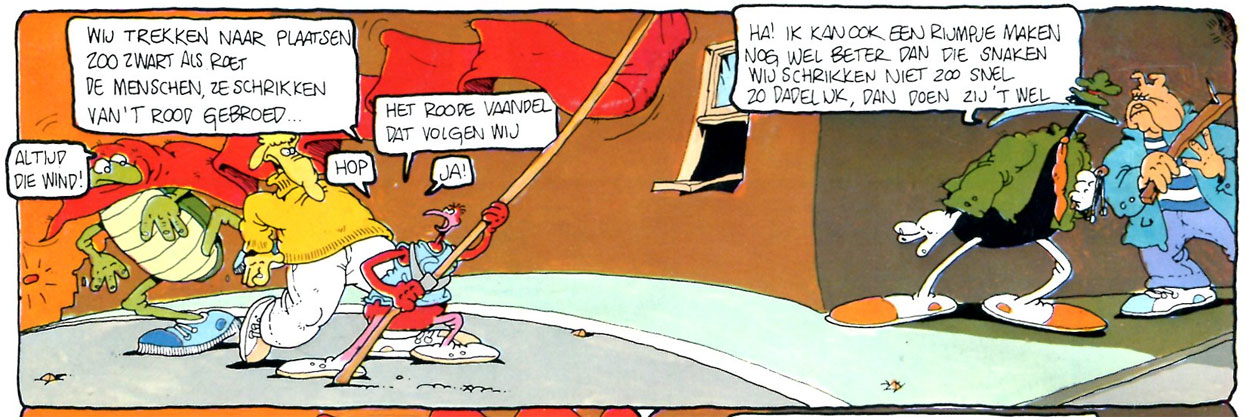
'Prut Pruts' (De Balloen #54 (1983).
De Vrije Balloen
Around 1977, Stevenhagen and De Jager noticed an ad at the Rietveld Academy in which young comic creators were invited to join the alternative comic magazine De Vrije Balloen. Founded in 1975, the magazine was run by a group of professional comic artists, who used it as an outlet for their more adult and experimental comics. Among the original contributors were Patty Klein, Jan van Haasteren, Jan Steeman and Thé Tjong-Khing. Along with another newcomer, Eric Schreurs, the Prutswerk duo was part of a new generation that debuted in its pages. Over the course of five years, the Prutswerk team-up remained a regular fixture in the magazine, crafting a funny animal cast of characters, spearheaded by the bird sleuth 'Prut Pruts Private Kreye'. Between 1982 and 1984, De Vrije Balloen was rebooted at Espee under the title De Balloen, and Gerrit de Jager and Stevenhagen were on the editorial board, along with Aad Labadie and Bert Tier. When their professional collaboration ended, Stevenhagen remained involved in the final issues of De Balloen, while De Jager had already left.
Prut Pruts Private Kreye
Prutswerk's first recurring comic character originated from one of their 'Twee Voor Twaalf' animations. For a segment about the Tower of London, they created an anthropomorphic raven, who later developed into their anthropomorphic investigator 'Prut Pruts Private Kreye' (1976-1983). In the comic, Prut Pruts is a cross between a raven and a crow, and the feature's pun-based name referred to the word "private eye" and "kraai", the Dutch word for "crow". During its first year, the comic ran in the Amsterdam neighborhood newspaper Buurtkrant Hugo de Groot, but it quickly moved to De Vrije Balloen. There, the duo expanded their strip with a full-fledged funny animal cast, with Prut Pruts working in all kinds of professions, but often returning to sleuthing. The 'Prut Pruts' strip appeared in De Vrije Balloen until its 47th and final issue in 1982. The character then reappeared in the magazine's short-lived follow-up De Balloen, published by Prutswerk's publisher and agent Ger van Wulften. By then, the comic had become largely a Stevenhagen solo project, and from issue #57 (1983) on, it was exclusively written and drawn by Stevenhagen.

'Prut Pruts', from Windig & De Jong's Gezellig en Leuk #7.
Malmberg magazines: Taptoe
Through their work for De Vrije Balloen, the Prutswerk team was also introduced to more mainstream magazines. Starting in 1978, their comics appeared in the Malmberg children's magazines, which were distributed at schools. In Taptoe, they co-created the Sherlock Holmes spoof 'Sulle Hooms' (1978-1982), scripted by Patty Klein. In each episode, the brilliant detective presents the reader with a puzzle or whodunit tale, of which the solution could be found in the same issue, a few pages later. The series was quite a challenge, since the team had to come up with a weekly puzzle, present it in a narrative and top it off with a funny punchline. Taptoe's 1983-1984 volume introduced a new Prutswerk creation, starring the unlucky garbage man 'Bert J. Prulleman' (1983-1984). This was however largely a Stevenhagen solo production, as the Prutswerk partnership had broken up by then. The series spawned three albums, published by Espee. In the late 1970s, the Prutwerk team also provided artwork to Malmberg's pre-school magazine Primo.

'Bert J. Prulleman' (Taptoe #9, November 1983).
Roel en zijn Beestenboel in Jippo
In Malmberg's Jippo magazine, Prutswerk launched 'Roel en zijn Beestenboel' (1978-1999), a popular comic that later became a staple in Gerrit de Jager's solo career. In Jippo, the feature debuted in the first issue of the school year 1978-1979 (16 September 1978). In the early one-page episodes - the first four were written in collaboration with Wim Schaasberg - young Roel moves with his parents from their countryside farm to an apartment building in the city. Sad to leave the farm animals behind, Roel dresses them in human clothing and takes them with him to his new home. In the first years, the animals - a cow, a pig, a goat, a duck and a hen - join Roel as he plays with neighborhood kids (including the quiet Jan-Willem), goes to school and joins the scouts. As the series progressed, the stand-out character became the goat Bokkie, whose antics and entrepreneurial skills cause most of the mayhem. This often leads to thematic gag series, like the early 1980s storyline in which Bokkie's outside swimming pool comes loose and drifts the entire animal crew into the open sea. 'Roel en zijn Beestenboel' remained a popular feature in Jippo until the final issue of 16 June 1984. Between 1981 and 1984, the Jippo years of the feature were collected in four comic albums, published by Het Spectrum and Espee. When in 1984, the 'Roel' comic found a new homebase in Robbedoes magazine, Stevenhagen briefly collaborated on the relaunched comic, although by then the Prutswerk team had already disbanded.
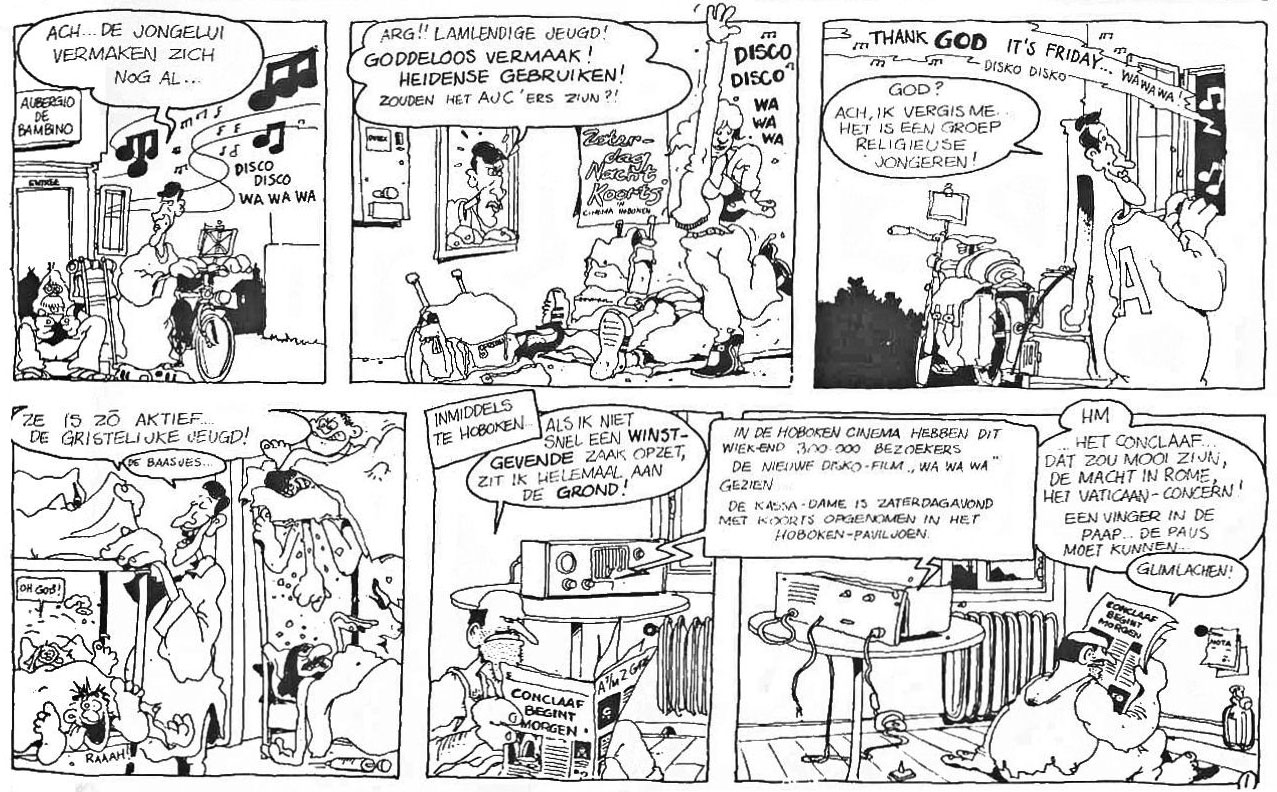
'De Ironische Man', starring Prime Minister Dries van Agt.
Han Gewetensvim
In the meantime, Prutswerk's alternative and satirical humor had also found its way to the adult-oriented comic magazine Gummi. Starting their contributions in issue #11 of 1978, the duo made a great many short stories throughout Gummi's run. Their main recurring character was 'Han Gewetensvim', a journalist with the A t/m Z Gazet. Its publisher is the shady businessman Toon Ladder, a precursor to Gerrit de Jager's later character of the same name. Leaning heavily on political references and the news of the day, Prutswerk's Gummi comics also had prominent roles for the politicians Dries van Agt and Hans Wiegel. After an unemployed man called Jeroen van Blerk is run over by a car, Toon Ladder convinces Van Agt to have him transformed into "The Ironic Man", a Frankenstein-like creature able to take down his enemies by making ironic remarks. The name 'De Ironische Man' was a nod to the "bionic man" cyborg from the TV show 'The Six Million Dollar Man'. In the story, the Ironic Man is sent to the World Championship Football in Argentina as a stand-in for the Dutch national team's star player Johan Cruyff. In real life, Cruyff indeed refused to join his fellow players, to protest the military junta of dictator Jorge Rafaele Videla.
A socially conscious political satire, the comic referenced Elvis Presley's death, the smallpox eradication, the Lebanese Civil War, the 1978 papal elections and the murder of Bulgarian dissident Georgi Markov with a poisoned umbrella. Real-life politicians received cameos, like the aforementioned Videla, but also Dutch Prime Minister Dries van Agt, Vice Prime Minister Hans Wiegel, Cuban dictator Fidel Castro and NATO secretary-general Joseph Luns. In 1980, 'Han Gewetensvim' was published as a comic book by Espee. Despite being very self-referential, instantly dated and uncompromisingly Dutch, two four-story episodes were translated into French by Yvan Delporte and printed in (À Suivre) magazine in 1978-1979.
While officially a Prutswerk production, the 'Han Gewetensvim' feature with its political satire was mostly Stevenhagen's story (the name Han Gewetensvim was even an anagram of Wim Stevenhagen). When Gummi magazine folded, 'Han Gewetensvim' was remodelled by Stevenhagen into 'Han en Hanneke', in which the main character appears with his little niece. This feature ran in Schooltv-Weekjournaal (1981-1983), a children's paper based on the educational TV broadcasts of 'Schooltelevisie', and daily in the newspaper De Waarheid (28 February-31 December 1983). The School-TV gags were collected in 'Ouwe Koeien' (Espee), while De Waarheid episodes were compiled in two 'Han en Hanneke' books by Espee. In 1985, the character of Han Gewetensvim returned in Onze Wereld, a magazine by Oxfam Novib about development aid.
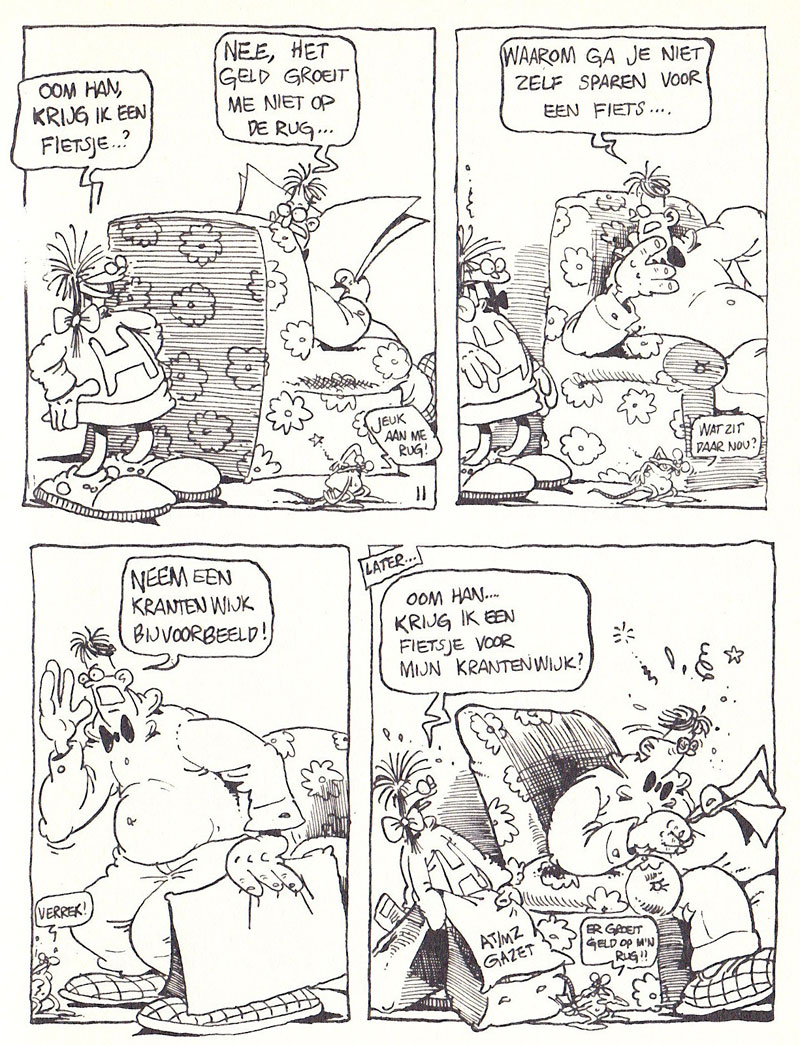
'Han & Hanneke'.
Espee
At Gummi magazine, Stevenhagen and De Jager were at the vanguard of a new generation of subversive comic creators, all gathered around the Amsterdam offices of the publishing house Espee, which also released their first book collections. Within a short time, the Espee crew expanded with Windig & De Jong, Eric Schreurs, Hein de Kort, Paul Bodoni and Willem Vleeschouwer, among other people. The central figure at Espee was publisher Ger van Wulften, who offered his contributors considerable creative freedom and was a clever salesman. He was even able to get some of the "sleazier" artists of his publishing company printed in mainstream magazines and making art for well-established corporations. As "Fer Gevelfut", he often appeared in the editorial comics made by his team. It was Stevenhagen who coined the term "Walgfun" for Espee's homemade genre of "walgfun" ("disgusting fun"). When in 1980-1981, Van Wulften took care of the production of the Dutch edition of Casterman's comic magazine (À Suivre), Stevenhagen and De Jager made him the star in their editorial strip as an unnamed publisher. Also operating as their agent, Van Wulften arranged Prutswerk's biggest success, the publication of their 'Familie Doorzon' comic in Nieuwe Revu magazine.
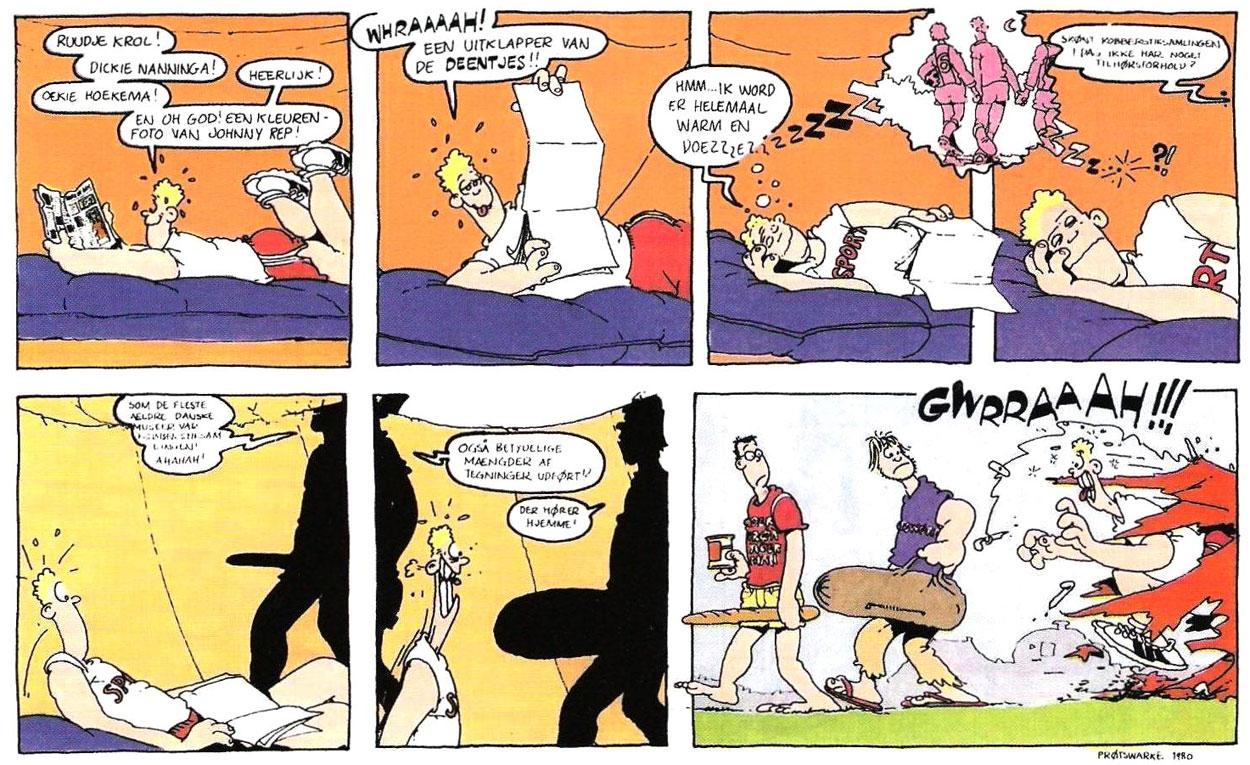
'Familie Doorzon', with cameo appearances by Gerrit de Jager and Wim Stevenhagen in the final panel (1980).
De Familie Doorzon
During the 1970s, Ger van Wulften distributed the French comic 'Les Frustrés' by Claire Bretécher to the men's magazine Nieuwe Revu. By 1979, it was time for a local replacement, and he introduced his artists Gerrit de Jager and Stevenhagen to the editors. The magazine wanted a raw humor comic with sex and social satire about a working-class family. Not one the reader could identify with, but one that would make them think: "I have neighbors like that." Working on this concept, Prutswerk came up with 'De Familie Doorzon' (1979-2010): its title a pun on the Dutch 1950s radio sitcom 'De Familie Doorsnee' about an "ordinary family", but also the term "doorzonwoning" to describe a typically Dutch home with windows on two sides, allowing the sun to shine all the way through. As can be expected, the dysfunctional Doorzon family lives in such a home, more specifically in the Labrador Street (a nod to Tintin's address) in the fictional town of Zulthoven.
For De Jager, the comic was right up his alley. Coming from the big city, he had married young and was now living in a boring residential area in Lelystad. However, it gave him enough material to spoof. Debuting in Nieuwe Revu in February 1980, the comic remained a fixture in its pages for thirty years. The book collections were instant bestsellers and gave De Jager and Stevenhagen their first commercial success. In 1980, the first 'Doorzon' album won De Jager and Stevenhagen a Stripschapspenning.
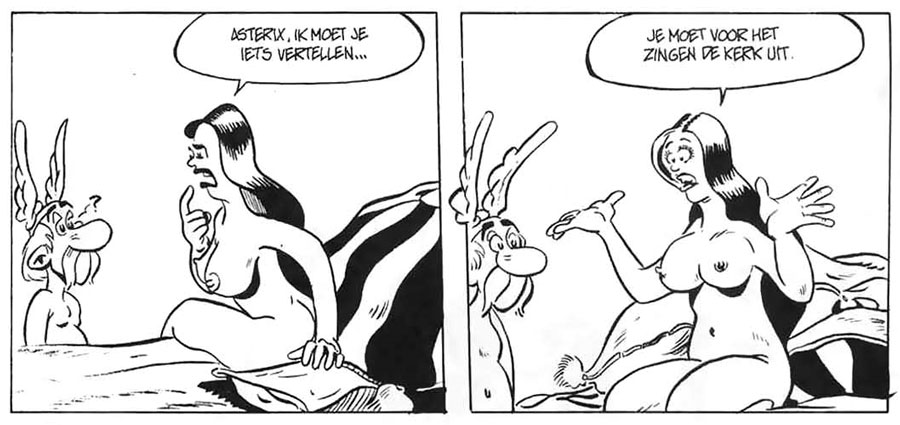
'Rammérix, Le Condôme' (1982).
Rammérix
During their association with Espee, De Jager and Stevenhagen also participated in group projects. Together, they wrote the script for 'Rammérix, Le Condôme', a porn parody of René Goscinny and Albert Uderzo's 'Astérix'. Published anonymously by Espee in 1982, the book was part of the 1980s wave of sex parodies with famous comic heroes. In the spoof, the Gauls discover they are out of condoms, inspiring Asterix and Obelix (here named Rammérix and Onanix) to travel to Rome to get new ones. On their trip, they have various sexual escapades, visit a Chinese restaurant in Lutetia and cause mayhem at the Lourdes pilgrimage site. However, Onanix isn't allowed to have sex, because he fell into the cauldron when he was young. This doesn't prevent him from having menhir-sized erections. The parody also featured a lot of meta humor, for instance when the characters complain about the nonsensical plot and "lack of enough sex scenes". 'Rammérix' is sometimes confused with two other 1982 'Asterix' porn spoofs, namely 'Asterix de Geilaard' and 'Asterix op de Walletjes' (both by De Bokken, 1982), signed by AVE. Out of fear of legal trouble, 'Rammérix' was produced in secret, even without using a pseudonym. The first page was drawn by Bert Tier, who then passed the pencil to Willem Vleeschouwer and Stevenhagen to finish the rest of the story. Aad Labadie was possibly also a contributor to the book. The book was released by Espee in collaboration with a "prestigious Dutch publisher who wanted to remain anonymous." After half of the books had been sold, the publisher suddenly changed his mind and destroyed the rest of the stock.
The end of Prutswerk
While Stevenhagen and De Jager complemented each other's talents, they also differed in personalities. Stevenhagen was very socially conscious and non-conventional. In the previously mentioned 2014 Stripnieuws interview, De Jager credited him with always remaining level-headed about commercial offers, like an offer to turn 'De Familie Doorzon' into a sitcom. He was able to reject deals that would basically come across as "selling out", with dire consequences for their comic series. De Jager sometimes described him as his personal manager. The downside was that Stevenhagen also rejected stuff that De Jager, in hindsight, would have considered fun or at least financially welcome. With several joint creations to their name, both men had their preferences and specialties, so they had been dividing most of the workload for their series. As their collective comics turned into a business, Stevenhagen felt less determined to deal with all the legal and financial paperwork than De Jager was. Since both had their individual series, it left them with less time to collaborate on their few remaining collective comics. Also creatively, they drifted apart, particularly exemplified in their vision on 'De Familie Doorzon'. The duo enjoyed political-social satire, but Stevenhagen wanted to use their new comic as a soapbox for his own, strong-minded convictions. De Jager, on the other hand, was more interested in a hilarious punchline, and even used the character of Ma Doorzon to spoof Stevenhagen's viewpoints.
In November 1982, the Prutswerk team officially parted ways. Although some journalists described the break-up as a dramatic moment, in reality it was more a departure on good terms. Both had already divided their preferred series. Stevenhagen continued 'Han Gewetensvim', 'Prut Pruts' and 'Bert J. Prulleman', while De Jager inherited 'Roel en Zijn Beestenboel' and 'De Familie Doorzon'. Their final joint creation in 1982 was the shady music manager 'Toon Ladder', whose antics De Jager would draw on his own for the magazines Muziek Express (1982-1988) and Music Maker (1986-1991).
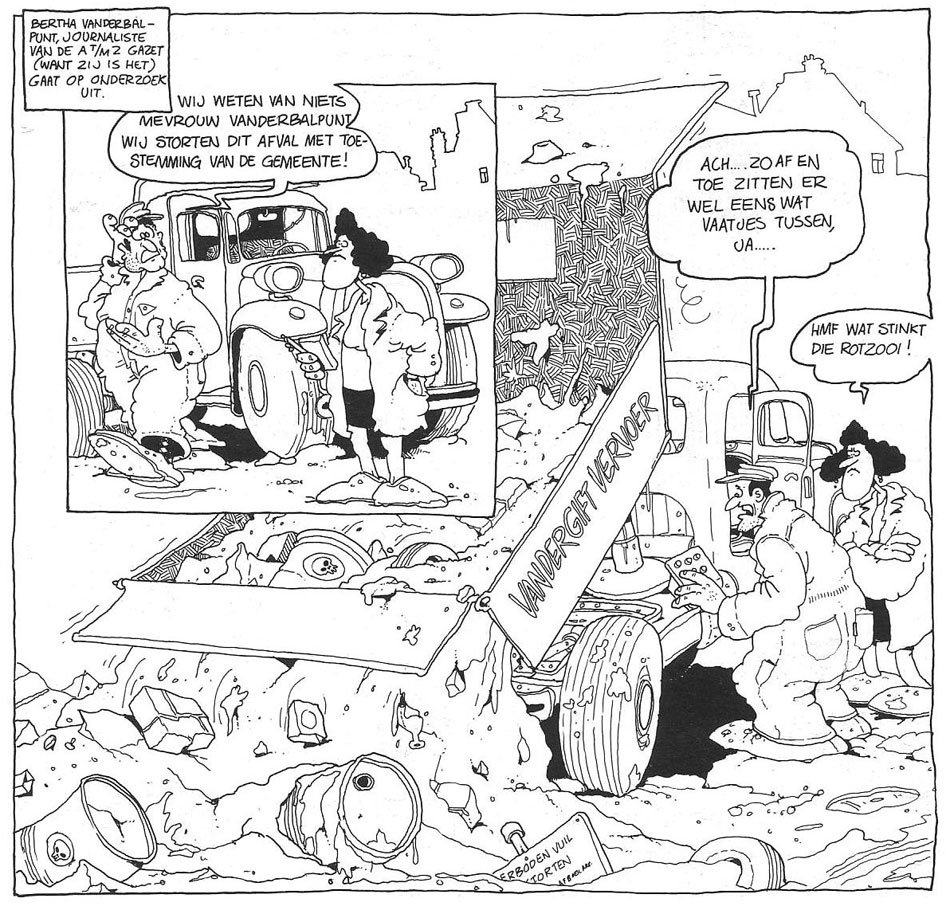
''k Wist Niet Dat Ik Het Onder Mij Had', one of the final Prutswerk productions (1982).
However, in the following years, the duo still had to team-up for their court case against publisher Ger van Wulften. Wanting to break free from their contract and reclaiming the rights and revenues of their comics, Nieuwe Revu's publishing company VNU paid De Jager and Stevenhagen all the money Van Wulften and Espee owed them. In turn they dismissed their claim against Van Wulften, while he terminated their contract, so they could go to other publishers.
During the remainder of the 1980s and the 1990s, Stevenhagen and De Jager occasionally worked together, for instance on their weekly three-page comic section 'De Nieuwste Revu' (1985) in Nieuwe Revu. For the newspaper De Volkskrant, they made a new installment in the collective series 'Hollands Drama' (1991). An early adapter in using Photoshop in his production work, Stevenhagen was also the digital colorist for De Jager and Philippe Bercovici's 1990s gag comic 'Eva en Adam'. Their final collaboration was a 1997 three-page comic for De Nieuwe Revu made in the light of Princess Diana's recent death: 'Diana & the Royal Dwarfs'. Around the turn of the century, Stevenhagen relocated to the province of Limburg, after which the two old friends lost sight of each other. Since 2021, Stevenhagen has been living in France.
In 2013, De Jager chronicled the final years of his creative partnership with Stevenhagen and their issues with Ger van Wulften in his autobiographical graphic novel 'Door Zonder Familie'.
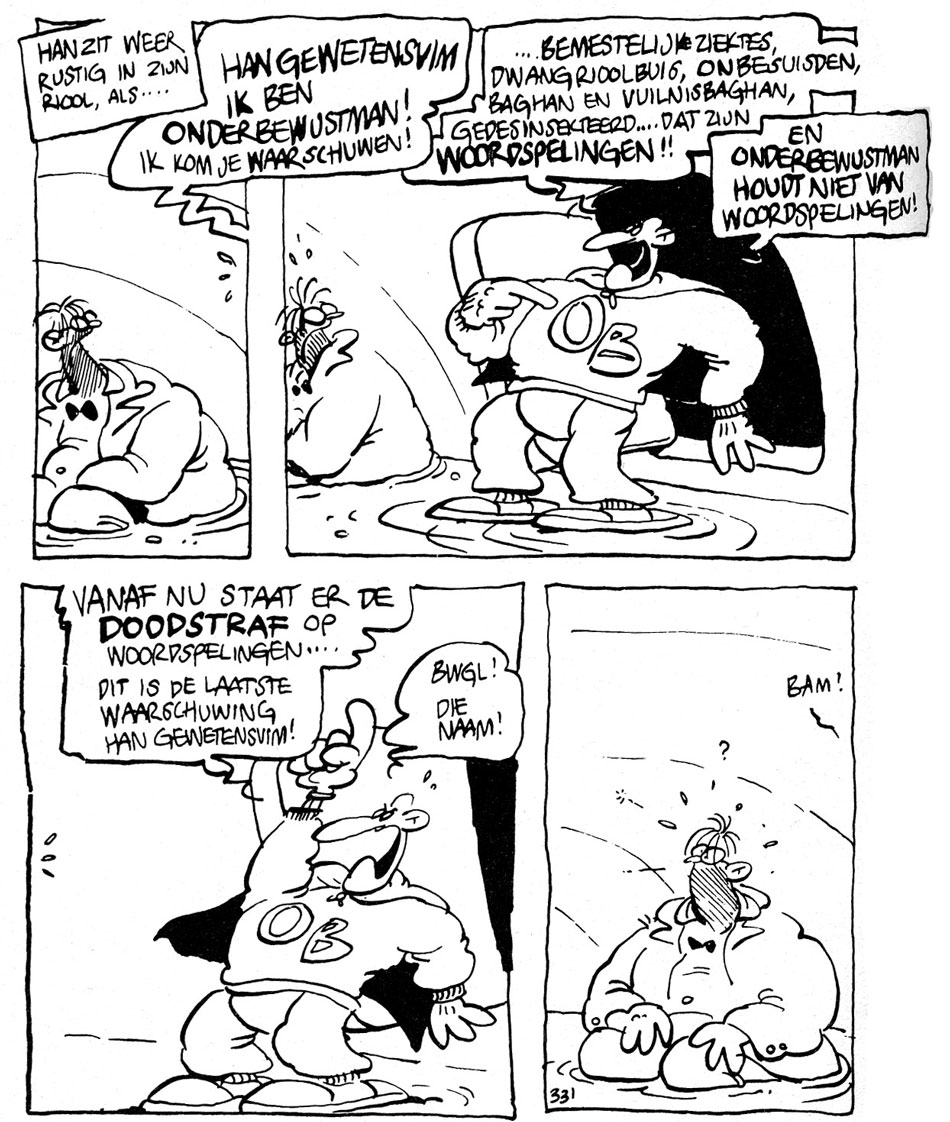
'Han Gewetensvim'.
Tegenaanval
During his Prutswerk years, Stevenhagen had already been making solo cartoons and illustrations for Alerta, a magazine about the political and social issues in Latin-America, and also for the Association for Conscientious Objectors. A man of principles and social engagement, Stevenhagen indeed refused to fulfill his military service. When this resulted in imprisonment, it prompted fellow comic creators Patty Klein and Willy Lohmann to initiate a collective protest comic book in support of their colleague. The 1985 anthology 'Tegenaanval' (De Lijn, 1985) contained old and new material by Dutch cartoonists like Lohmann, Fritz Behrendt, IJf Blokker, Corver, Arend van Dam, Baldi Dekker, Loek van Delden, Frankie, Tom Hageman, Elly Holzhaus, Rudy Hulleman, Coen de Jong, Fred Julsing, Koedam, Raymond Koot (better known as Typex), Nel van Beek-Van Koten, Piet Kroon, Fred Marschall, Marvano, Lex van de Oudeweetering, René, Scheepers-Hendriks, Peter de Smet, Jan Steeman, Peter van Straaten, Studio Visioen, Fred Thie, Berend Vonk and De Wit. Belgian contributions came from André Franquin, Gal (Gerard Alsteens), Ronald Grandpey, Ploeg, Jef Wellens, Yaack and Yurg.
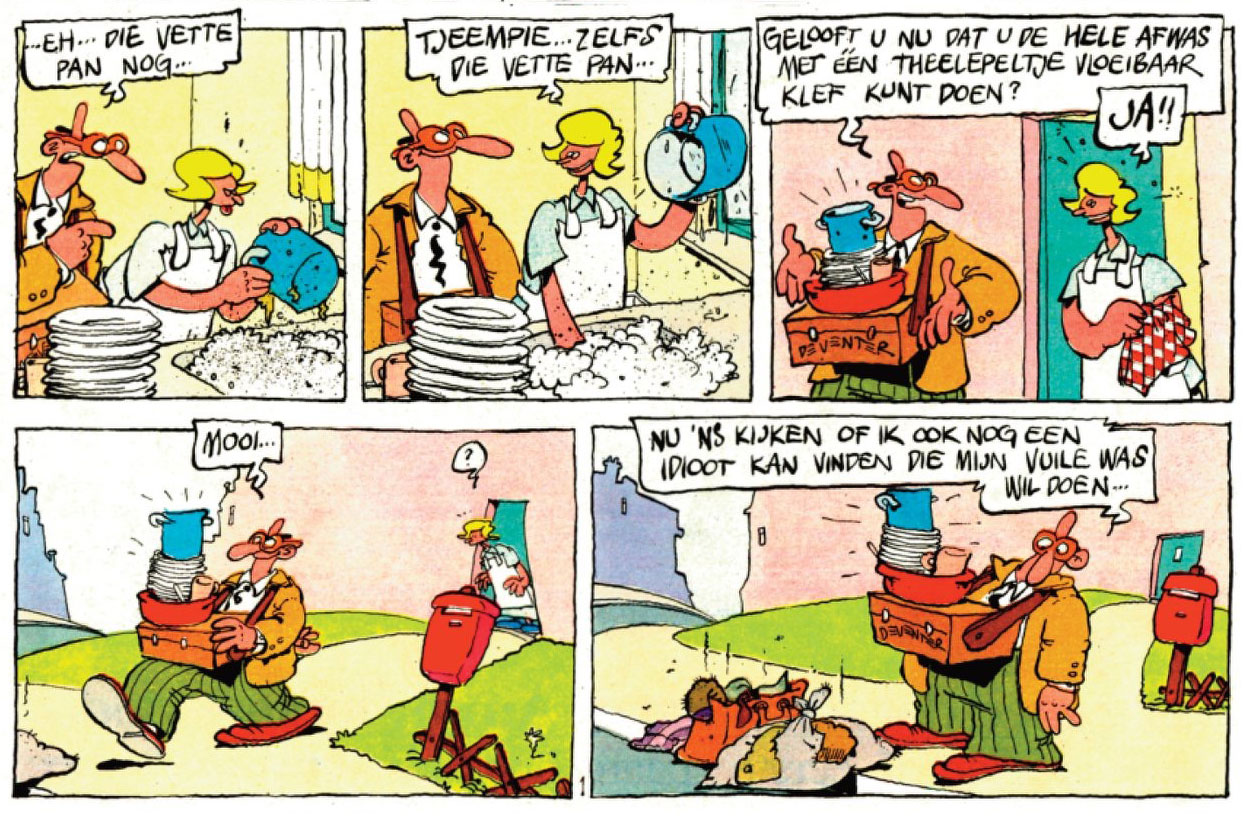
'Deventer'.
Solo comics
After the break-up of Prutswerk, De Jager settled upon a stylized graphic style which more and more appealed to a large mainstream audience. Stevenhagen, on the other hand, further developed the more gritty and cartoony underground style of their early collaborations, recognizable for its characters with big feet, thick legs and relatively thin heads, as well as much graphic mayhem in the panels. As he initially continued some of the early Prutswerk creations - 'Bert J. Prulleman' in Taptoe and 'Han & Hanneke' in De Waarheid - he gradually shifted towards political satire and commissioned comics, cartoons and illustrations for mostly clients with a social or political engagement.
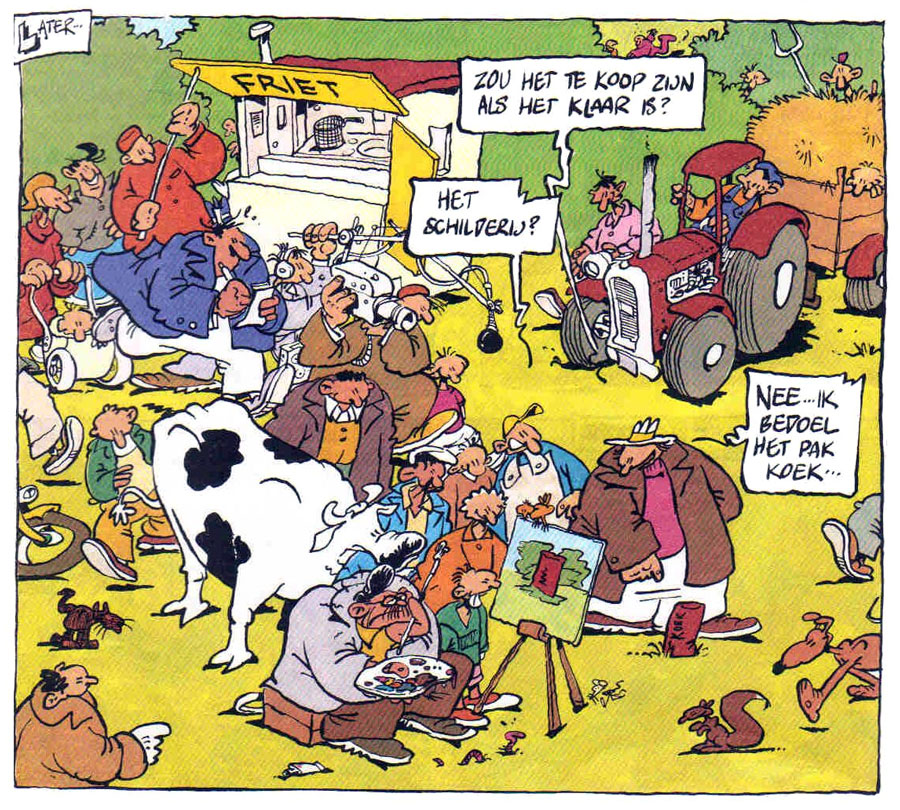
'De Familie De Beukelaer' (1987).
On occasion, Stevenhagen appeared with new creations in mainstream magazines, for instance the gag comic about the obnoxious door-to-door salesman 'Deventer' (1985) in the men's magazine Panorama (the title can also be read as "De Venter", meaning "the salesman"). During the 2020s, these gags were reprinted by André Wijntjes in his anthology comic book series Ratjetoe. For the TV guide Varagids, Stevenhagen created the comic feature 'Kabelweg' (1988) and during the mid-1990s, he produced the comic 'Mr. Jansen Knows Best' (1996) in Hello You!, Malmberg's educational English-language magazine. More commercially oriented were the five landscape-format comic booklets and the one regular album he made with 'De Familie De Beukelaer' for De Beukelaer biscuits (1987).
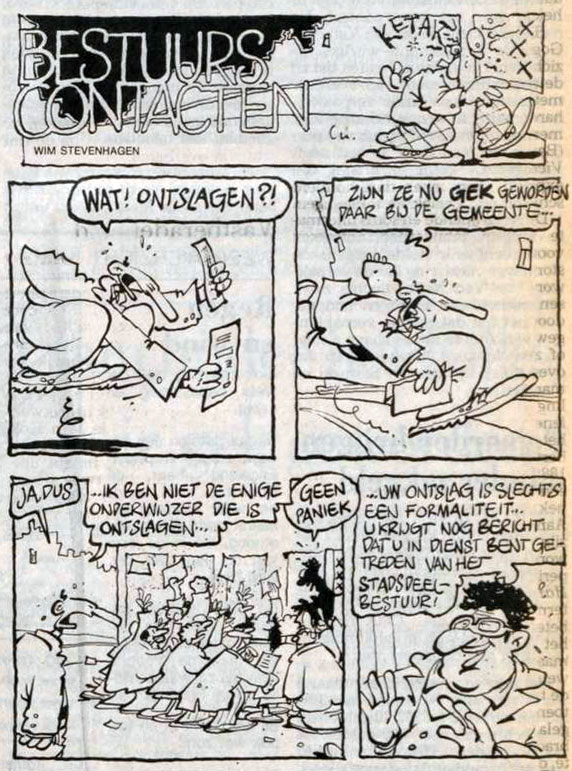
'Bestuurscontacten' (Het Parool, 30 January 1988), with a guest appearance by then-mayor of Amsterdam Ed van Thijn in the final panel.
Political cartoons and comics
During the 1980s and 1990s, Stevenhagen's focus shifted towards comics and cartoons based on current affairs and socio-political issues. By the mid-1980s, they appeared regularly in the communist newspaper De Waarheid, as well as the squatter's magazine Bluf!. Later on, his political cartoons ran in Algemeen Dagblad (AD) and regional papers like Leidsch Dagblad and Haarlems Dagblad. Direct and with humor, Stevenhagen mostly attacks hypocrisy, not only by authorities and bigwigs, but also by the common man and woman in the street. People's tendency to avoid problems and point the finger at others was targeted frequently. On top of that, he is also not particularly fond of the usage of alcohol, tobacco and cars. Between early 1986 and early 1988, Stevenhagen commented on Amsterdam's municipal government in the comic feature 'Bestuurscontacten', published in the local newspaper Het Parool.
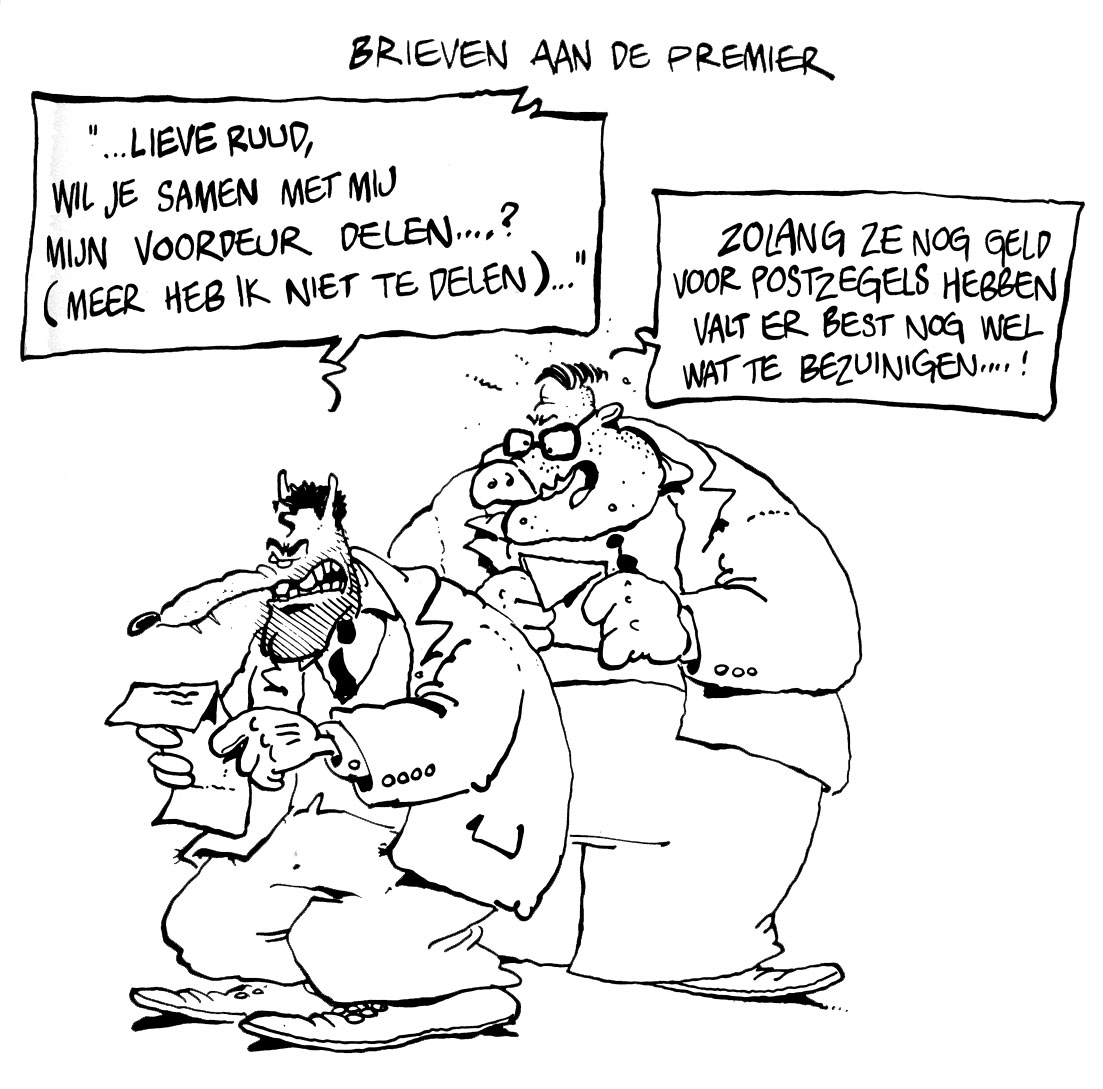
Cartoon for De Waarheid (29 May 1984), caricaturing Dutch Prime Minister Ruud Lubbers. Translation: "Letters to the Prime Minister. - 'Dear Ruud, do you want to share my front door with me...? (More I cannot share)..." - "As long as they still have money for stamps, there's still enough to economize."
Since his newspaper cartoons often tackled people from the medical profession, Stevenhagen was asked to become the regular illustrator and cartoonist for Medisch Contact, a trade journal for doctors, starting in 1998. In 2000, he also began contributing to the progressive left-wing activist magazine Ravage, which criticized capitalism, military violence, and social injustice. Over the years, several institutions have requested Stevenhagen's services, for instance the Anne Frank Foundation (1986), the Jellinek clinic for addiction care (1989), Amnesty (1989), the Youth Policy Council (1992), Defence for Children (1993) and Vluchtelingenwerk (1994), the Dutch Refugee Council (Vluchtelingenwerk, 1994) and the environmental organization Milieudefensie, as well as the provincial governments of Utrecht and North Holland.
A selection of Stevenhagen's political cartoons for De Waarheid and Bluf! were collected in the book 'Ja Ja, Maak Er Maar Een Grapje Van!' (Espee, 1984), and his healthcare cartoons have been compiled in 'Bijverschijnselen' (Vanderwees, 1999). The booklet '1992-2007: Kinderrechten Volgens Stevenhagen' (Defence for Children International, 2007) collected a series of cartoons about children's rights.
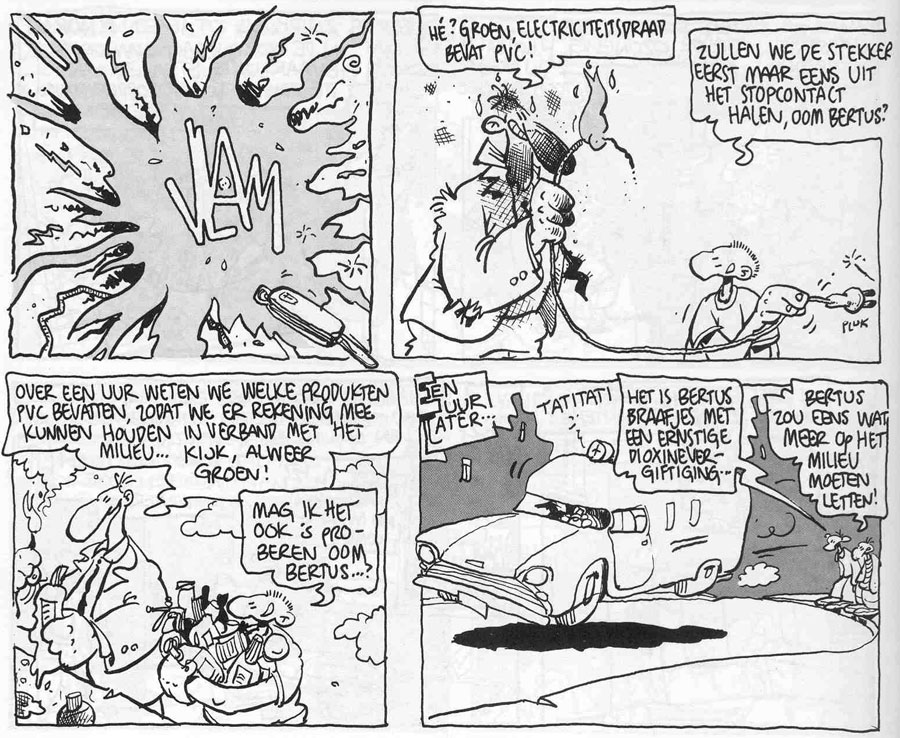
'Bertus Braafjes' (Milieudefensie).
Later comic creations
Most of Stevenhagen's later comic characters were created for his commercial clients, often produced through the Comic House agency. Already during the Prutswerk years, Stevenhagen made the comic book ''k Wist Niet Dat Ik Het Onder Mij Had' (1982) with writer Aart Vermeulen for Stichting Milieu Educatie (Environmental Education Foundation). A recurring character in his more politically oriented comics was 'Bertus Braafjes', who starred in the pocket comic book 'Bertus Braafjes in Amerika' (Espee, 1984) and in the monthly magazine of the environmental organization Milieudefensie (1985-1986?). His name is a pun on Dutch novelist Bertus Aafjes.
A longtime client has been the Algemene Bond van Onderwijzend Personeel (ABOP) and its successor Algemeen Onderwijs Bond (AOB), a union for education staff. In 1984, he created the character of 'Bob A.' for the ABOP magazine Het Schoolblad. Since the establishment of the AOB in 1997, Stevenhagen has created the comic features 'Ab O.' (1997) and 'Bob & Ab' (2002) for the monthly member magazine Het Onderwijsblad.

'Henk Vanderspatie' (2000).
Another enduring collaboration has been with Pers, a bi-weekly trade journal for graphic designers, for which Stevenhagen developed the character 'Henk Vanderspatie' (1988-?). For several years, his 'Bob en Bertha' (2002-?) ran in Eigen Huis Magazine, a trade journal for homeowners. Between 1996 and 2021, Stevenhagen's character 'Theo de Buurtconciërge' appeared on the back cover of Tribune, the party magazine of the socialist party SP. Through the somewhat shabby Theo, Stevenhagen tackled subjects like integration, crime, disability benefits, the Iraq war and privatization.
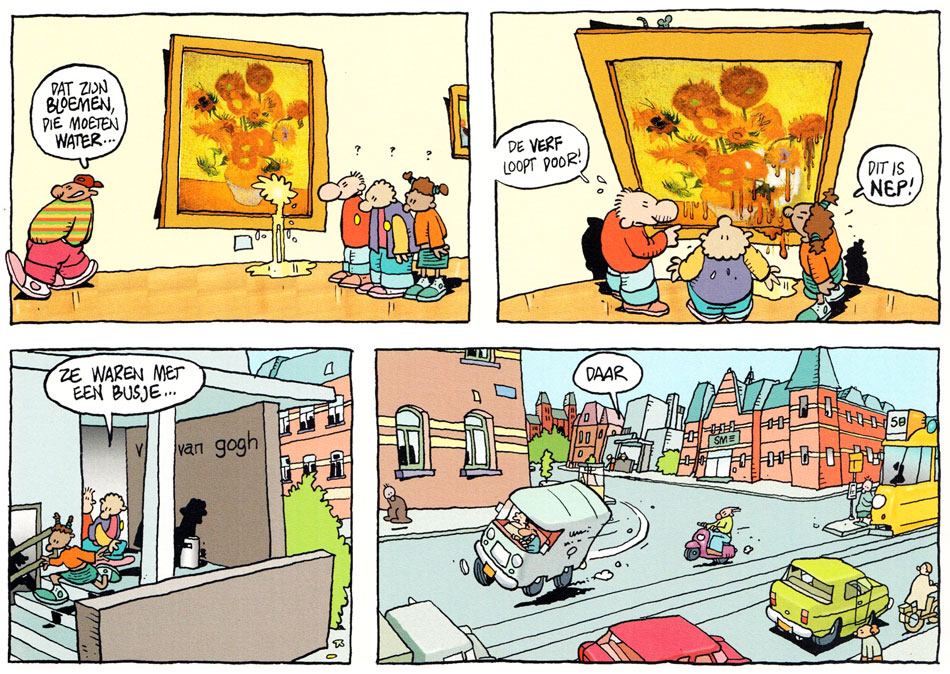
'Kunstschooldag' (1999).
Among Stevenhagen's other creations have been 'Bram en Sjaak' for Rabobank (1987), 'Willy Wethouder' for the PvdA party magazine Lokaal Bestuur (1988), 'Buren' for Eckpress (1990), 'Cor Bal' in HKwadraat (1993), 'Bobby en Juut' for the Amstelland Police (2000) and ''t Is Frits' for the Train Taxi service (2003).
On occasion, Stevenhagen has worked in collaboration with a scriptwriter. The features 'Barretje Hilton' (1990) in Krant op Zondag and 'Rachel Roddelstein' (1998) for Joods Journaal were scripted by Leo Groenteman. Together with screenwriter Dick van den Heuvel, Stevenhagen created the full-length comic book 'Kunstschooldag' (1999), commissioned by the cultural JAM Foundation for the 10th and 11th Amsterdam Art School Day.
Graphic contributions
In 2002, Wim Stevenhagen designed the cover for 'Sleurhut: de Mafste Hits Voor Onderweg - Volume 2', a CD collecting funny songs to play during long car journeys in the holiday season.
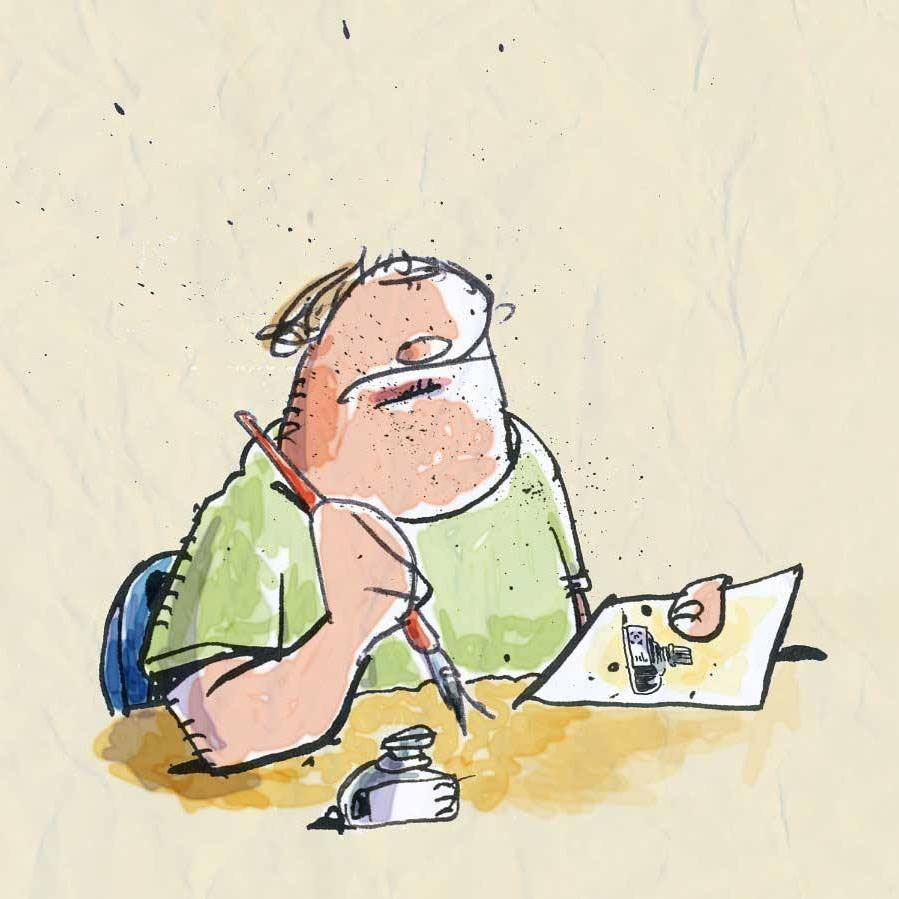
Self-portrait.